
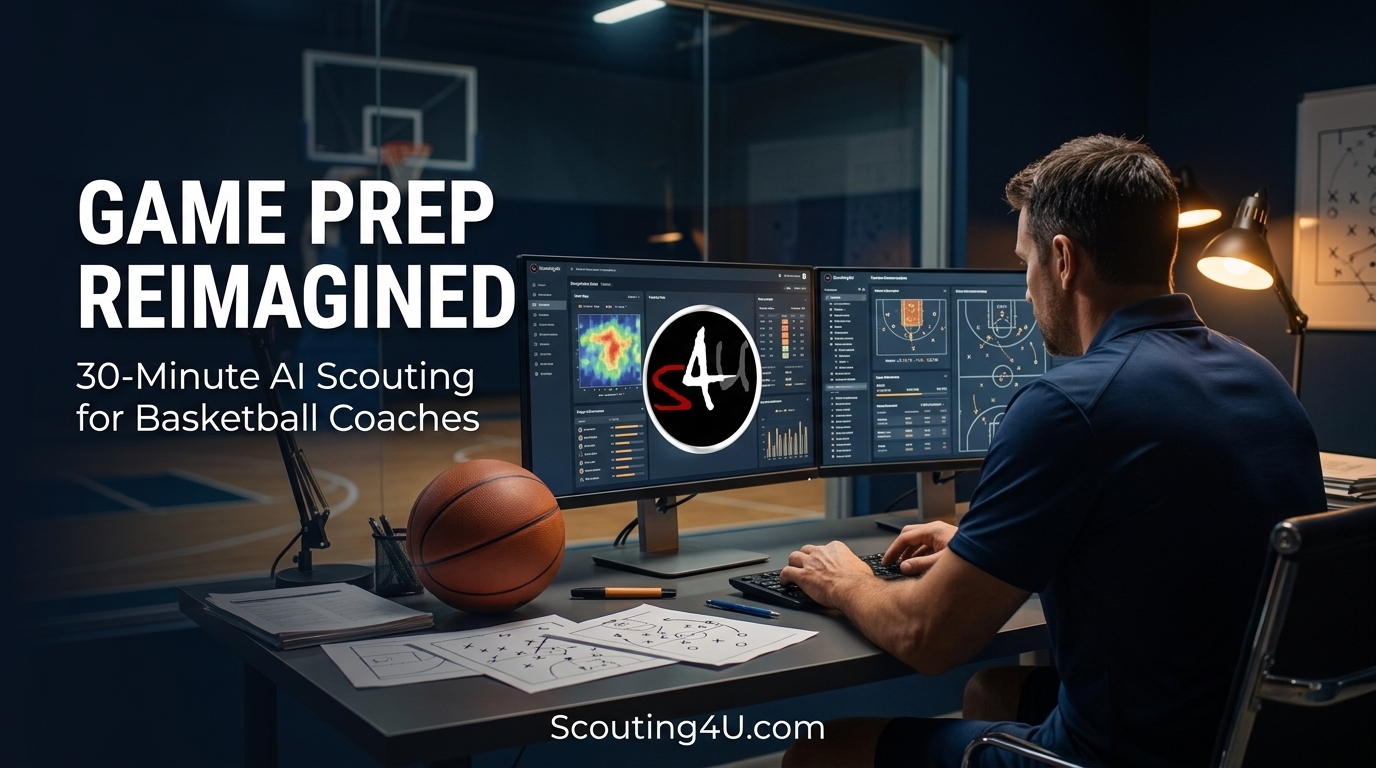
The 30-Minute Game Prep: AI Scouting Tips Made Easy
Key Takeaways
AI can reduce traditional scouting time from 6 hours to 30 minutes.
Basketball game preparation scouting tips focus on core metrics and data-driven insights.
Tools like Scouting4U enable efficient analysis of pick and roll defense and shot charts.
Optimizing rotations between starters and the bench is achievable with analytics.
Basketball game preparation scouting tips have changed more in the last three years than in the previous three decades. AI tools now let coaches cut a six-hour scouting session down to 30 minutes - without losing depth. This guide walks through the exact process: which metrics to pull first, how to read shot charts fast, where pick and roll defense fits in, and how to build a report your staff can actually use before tip-off. Whether you coach at the amateur or professional level, these basketball game preparation scouting tips will save you time and sharpen your game plan. Coaches who treat basketball game preparation scouting tips as a structured discipline - not a last-minute scramble - consistently outperform those who rely on instinct alone.
Why Basketball Game Preparation Scouting Tips Matter More Than Ever
Most coaches spend too long on the wrong parts of prep. They rewatch full games when they only need clips. They build reports from scratch when templates exist. They eyeball tendencies when the data already shows them clearly.
Good basketball game preparation scouting tips fix that problem. They tell you where to look, in what order, and for how long. The goal is not to watch more film. The goal is to walk into the game with a clear, specific plan - and enough sleep to execute it.
AI changes the equation because it processes data at a scale no human can match. A platform like Scouting4U can scan possession outcomes, shot locations, transition rates, and defensive schemes across an entire season in seconds. That raw output still needs a coach's judgment. But the heavy lifting is done before you even sit down.
Applying sound basketball game preparation scouting tips consistently - not just before big games - is what separates programs that improve steadily from those that stay stuck. For context on how analytics is reshaping the sport at every level, the piece on why amateur basketball teams need analytics now is worth reading before you build your prep system.
The 30-Minute Framework: Basketball Game Preparation Scouting Tips in Practice
Here is a realistic 30-minute structure you can follow the day before a game.
Minutes 0-8: Pull the opponent's shooting data. Start with shot charts. You want to know where they score efficiently and where they do not. Look at corner three rate, mid-range frequency, and paint attempts. A team that converts 42% from the corners but only 31% from the wings changes your defensive rotations immediately.
Minutes 9-16: Review pick and roll tendencies. Most offensive sets run through the pick and roll. Does the ball handler pull up, turn the corner, or kick to the short roll? Does the big dive or pop? These two questions shape your entire defensive scheme. Basketball game preparation scouting tips almost always start here because this single play type accounts for roughly 30-40% of half-court possessions at most levels.
Minutes 17-22: Check player efficiency on key rotations. You do not need to scout all ten players equally. Find the two or three players who create most of the offense and understand their tendencies. True Shooting Percentage (TS%) tells you who finishes. Player Efficiency Rating (PER) tells you who drives decisions. Focus there.
Minutes 23-30: Build or update the scouting report. With AI tools, this step is fast. Input what you found in the first 22 minutes and let the platform structure it. You get a document your assistants and players can read in five minutes before warm-ups.
That is the core of practical basketball game preparation scouting tips - not more time, but better sequencing. Coaches who follow this framework report that their pre-game confidence improves because they know exactly what the opponent wants to do before the opening tip.
AI's Role in Modern Scouting
Artificial intelligence changes scouting in two ways. First, it speeds up data collection. Second, it surfaces patterns a human analyst might miss across hundreds of possessions.
Possession analysis used to mean hours of manual tagging. A coach would rewatch a game, pause and log each play type, build a spreadsheet, then draw conclusions. That process worked, but it was slow and left room for confirmation bias - you tend to notice what you already expect to see.
AI removes that bias. It counts every pick and roll, every transition attempt, every late-clock shot without fatigue or expectation. You get a cleaner baseline to work from.
That does not mean human judgment disappears. Basketball game preparation scouting tips always involve reading context the data cannot capture. A player with a sore ankle plays differently than the stats show. A team that just played three games in four days will be slower in transition. You layer that knowledge on top of the AI output, not underneath it.
Effective basketball game preparation scouting tips blend automated pattern recognition with the contextual awareness only a coach can provide. To see how AI is being used at the highest levels, the breakdown of what happens inside an NBA scouting department gives useful context on the gap between professional and amateur practice - and how that gap is closing.
Scouting Tools and Platforms
Not all platforms are built the same way. Some are designed for video tagging. Some focus on statistical output. The best ones for basketball game preparation scouting tips do both and connect them.
Scouting4U is built around that connection. You can pull shot chart data by zone, tag film clips by play type, and generate a structured report in the same workflow. That matters because switching between tools during prep adds time and breaks concentration.
Shot chart zones are worth explaining briefly. Rather than treating the court as one area, zone analysis breaks it into sections - restricted area, paint, mid-range, corner three, above-the-break three. Each zone has a different expected value. A team shooting 38% from above the break is roughly league average. The same 38% from the mid-range is extremely efficient for that zone. Context matters.
When coaches follow basketball game preparation scouting tips that include zone-based shot chart review, they make smarter decisions about where to apply defensive pressure and where to give ground. For a deeper look at how to read these charts quickly and accurately, the guide on how to analyze basketball shot charts effectively covers the method step by step.
Key Metrics for Preparation
Basketball game preparation scouting tips rely on picking the right numbers. Here are the ones that matter most in a pre-game context.
True Shooting Percentage (TS%): This accounts for twos, threes, and free throws in a single number. It is the cleanest way to measure scoring efficiency. An opponent with a high TS% is dangerous regardless of how they get their points.
Player Efficiency Rating (PER): PER aggregates contributions across categories - scoring, rebounding, assists, steals, blocks, turnovers. It is not perfect, but it is fast. When you need to rank five players in two minutes, PER gives you a starting point.
Transition rate and pace: How often does the opponent push in transition? A team that scores 20% of its points in the first five seconds of a possession plays very differently from one that runs set plays every time. This changes your defensive rebounding instructions immediately.
Assist-to-turnover ratio: This tells you how disciplined the offense is. A low ratio means pressure defense can force mistakes. A high ratio means the team moves the ball well and you need to guard actions, not just players.
Sound basketball game preparation scouting tips never rely on a single stat. You triangulate across two or three numbers to confirm what you are seeing, then validate with film. For a full breakdown of these and other metrics, the article on advanced basketball statistics and must-know metrics is the most complete reference available.
Rotation Optimization
Basketball rotation optimization is where basketball game preparation scouting tips meet in-game management. You are not just preparing for one lineup - you are preparing for six or seven different five-man groups the opponent might use.
Data helps here in a specific way. You can pull plus-minus data on opponent lineup combinations. If their second unit consistently gets outscored during the second and third quarters, you know when to push. If their closing lineup is unusually strong, you protect your lead differently in the fourth.
On your own side, rotation decisions affect stamina and matchups. A player who guards the opponent's best scorer needs more rest. A bench unit that plays fast can exploit a tired starter rotation. These decisions are easier when you have the data to back them up rather than going on feel alone.
Basketball game preparation scouting tips around rotations also mean knowing your own personnel as well as the opponent. The best pre-game plan accounts for both sides of the matchup.
Pick and Roll Defense Strategies
Pick and roll defense is the single most discussed topic in basketball game preparation scouting tips at the professional and semi-professional level. That is because the play works so well. Most teams run it dozens of times per game, and one small mistake in coverage leads directly to a good shot.
There are four common coverage schemes: drop, hedge, switch, and blitz. Each has trade-offs.
Drop coverage keeps the big near the paint and concedes the pull-up jumper. It works against poor shooters and protects the rim. Hedge coverage sends the big out hard to slow the ball handler, then recovers. It is aggressive but creates rotation problems if the recovery is slow. Switching removes confusion but requires size and skill across positions. Blitz traps the ball handler and relies on rotations to cover the kick-out pass - it creates turnovers but gives up open threes if rotations break.
Basketball game preparation scouting tips for pick and roll defense start with one question: can the opponent's ball handler shoot the pull-up? If yes, drop is risky. If no, drop is your cleanest option. Everything else follows from that. Revisiting this question with fresh data before every game - rather than defaulting to a scheme from last season - is one of the most practical basketball game preparation scouting tips a coaching staff can adopt.
Basketball Shot Chart Analysis
Shot charts are one of the fastest ways to build a defensive game plan. In two minutes, you can see where an opponent generates their best looks and where they waste possessions.
The most useful application is identifying dead zones - areas where the opponent shoots frequently but converts poorly. If a team loves the mid-range but shoots 31% there, you can give them that shot on purpose. You load your defense toward the areas they actually hurt you.
Basketball game preparation scouting tips on shot charts also include looking at creation versus catch-and-shoot splits. A player who only scores off movement is less dangerous when you deny them the catch. A player who creates their own shot needs to be guarded differently, regardless of where they stand.
For more detail on this method, the full guide on basketball shot chart analysis and transforming data into insights goes deep on the process.
Game Film Breakdown
Film work and data work are not the same thing, and basketball game preparation scouting tips need both. Data tells you what happened. Film tells you why.
When you see that an opponent scores 60% of their points in the paint, the data does not tell you how they get there. Film shows you whether it is post entries, drive kickbacks, offensive rebounds, or transition layups. Each of those requires a different defensive response.
The most efficient film sessions are clip-based, not full-game rewatches. Tag the possessions you need - pick and roll sequences, late-clock situations, out-of-bounds plays - and watch only those. A 45-possession breakdown is faster to digest than 48 minutes of footage, and it keeps your staff focused on what matters.
Basketball game preparation scouting tips applied to film sessions work best when someone on the staff has already tagged clips before the group sits down to watch. That pre-work cuts group review time in half. For a complete process, the basketball game film breakdown coach's step-by-step guide covers how to structure a session from start to finish.
Scouting Report Creation
A scouting report is only useful if your players read it. That means it needs to be short, clear, and specific to the opponent.
Basketball game preparation scouting tips for report writing: lead with the three most dangerous plays the opponent runs, follow with the two or three players who drive their offense, and end with your defensive rules for the game. No more than two pages. Use visuals where possible - shot charts, play diagrams, clip screenshots.
AI shortens this dramatically. Instead of writing the report from scratch, you pull the data, tag the key clips, and let the platform structure the output. Your job becomes editing and adding context, not building from a blank page.
The best basketball game preparation scouting tips for report creation emphasize specificity over completeness. A two-page report your players absorb in five minutes beats a ten-page document they ignore. For more on how to structure this process, how to create a basketball scout report in 2026 covers both the template and the workflow.
Putting Basketball Game Preparation Scouting Tips Together
The coaches who get the most out of these basketball game preparation scouting tips are not the ones with the most time. They are the ones with the clearest process. They know what they are looking for before they open the platform. They pull data in a set order. They build the report last, not first.
Start with shot charts and pick and roll tendencies. Layer in player efficiency data. Watch clips to confirm what the numbers suggest. Build a short, specific report. That sequence works at every level - from youth travel ball to professional preparation. Every one of these basketball game preparation scouting tips is designed to reduce decision fatigue and increase the quality of the choices you make on game day.
The 30-minute benchmark is real. With the right tools and a repeatable process, you can prepare for any opponent in half an hour. Programs that build basketball game preparation scouting tips into their weekly routine - not just before marquee matchups - develop a cumulative edge over a full season. What you do with the other five and a half hours is up to you.
To explore the platform that makes this possible, visit the Scouting4U platform features and tools page, or check the Scouting4U subscription plans and pricing to find the right tier for your program.
Frequently Asked Questions
How does AI reduce scouting time from 6 hours to 30 minutes?
AI automates the data collection and pattern recognition steps that used to require manual review. Instead of rewatching full games to log play types and shot locations, the platform processes that information automatically. You spend your time interpreting the output and making decisions, not gathering raw data. That shift - from collection to analysis - is where most of the time savings come from.
Which metrics should I prioritize when using basketball game preparation scouting tips?
Start with True Shooting Percentage to understand scoring efficiency, and transition rate to understand pace. Then look at pick and roll frequency and the ball handler's pull-up shooting percentage. Those four data points answer the most important defensive questions before you watch a single clip. PER and assist-to-turnover ratio add useful context once you have the baseline.
How can Scouting4U help with basketball game preparation scouting tips?
Scouting4U connects shot chart data, video tagging, and report generation in a single workflow. You can pull zone-by-zone shooting data, tag film clips by play type, and export a formatted scouting report without switching platforms. That integration removes the friction that slows down traditional prep sessions.
Why does rotation optimization matter in game preparation?
Rotations affect both your team and your read of the opponent. On the opponent's side, lineup data reveals which combinations are effective and which create matchup opportunities. On your side, rotation decisions manage stamina and defensive matchups across 40 minutes. Getting this wrong in the fourth quarter costs games that were even going into the final period.
Can these basketball game preparation scouting tips work at the amateur level?
Yes. The process scales down cleanly. Amateur teams may have less data available, but the framework is the same: start with shooting tendencies, identify the two or three players who drive the offense, build a short defensive plan around your most important coverage decisions. Even a 15-minute prep session using this structure is more effective than two hours of unfocused film watching.
Enjoyed this article? Share it with others!
Founder & Lead Scout, Scouting4U
2x EuroLeague champion with 30+ years in professional basketball. Daniel won EuroLeague titles with Maccabi Tel Aviv, helped build the staff behind the 2007 European Championship, and has delivered 100+ professional scouting reports across 50+ leagues. If it happened in a European basketball front office, he was probably in the room. He founded Scouting4U in 2010 to bring championship-level scouting intelligence to every club.
No reviews yet. Be the first to share your experience!
Related Articles
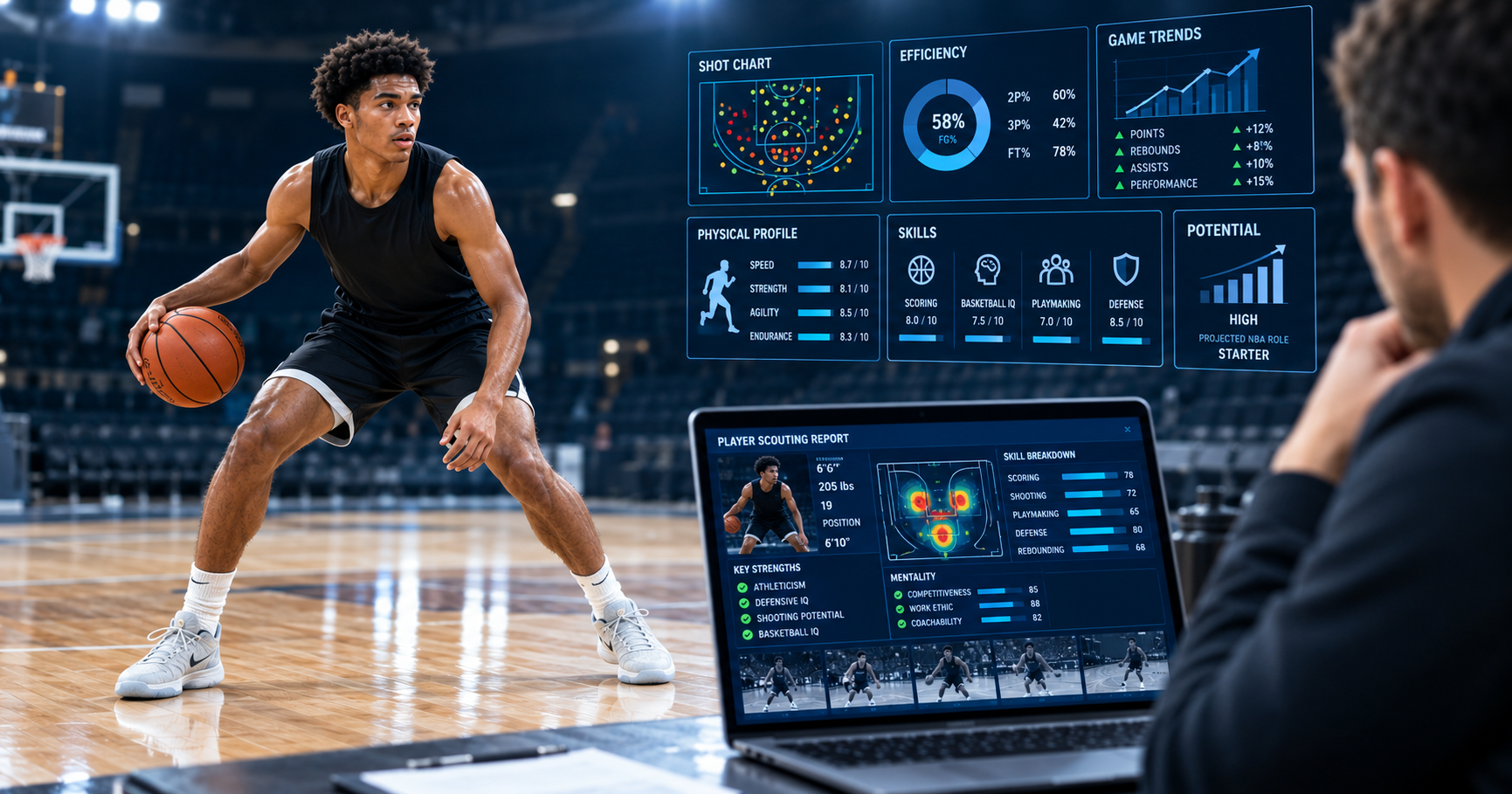
Analyzing Basketball Player Potential: Scouting Insights
Key Takeaways Analyzing basketball player potential combines data analysis with scouting intuition. Core metrics includ...
Mastering Basketball Service: Scouting Insights & Tools
Key TakeawaysA strong basketball service covers everything from player evaluation to game strategy analysis.Scouting4U g...
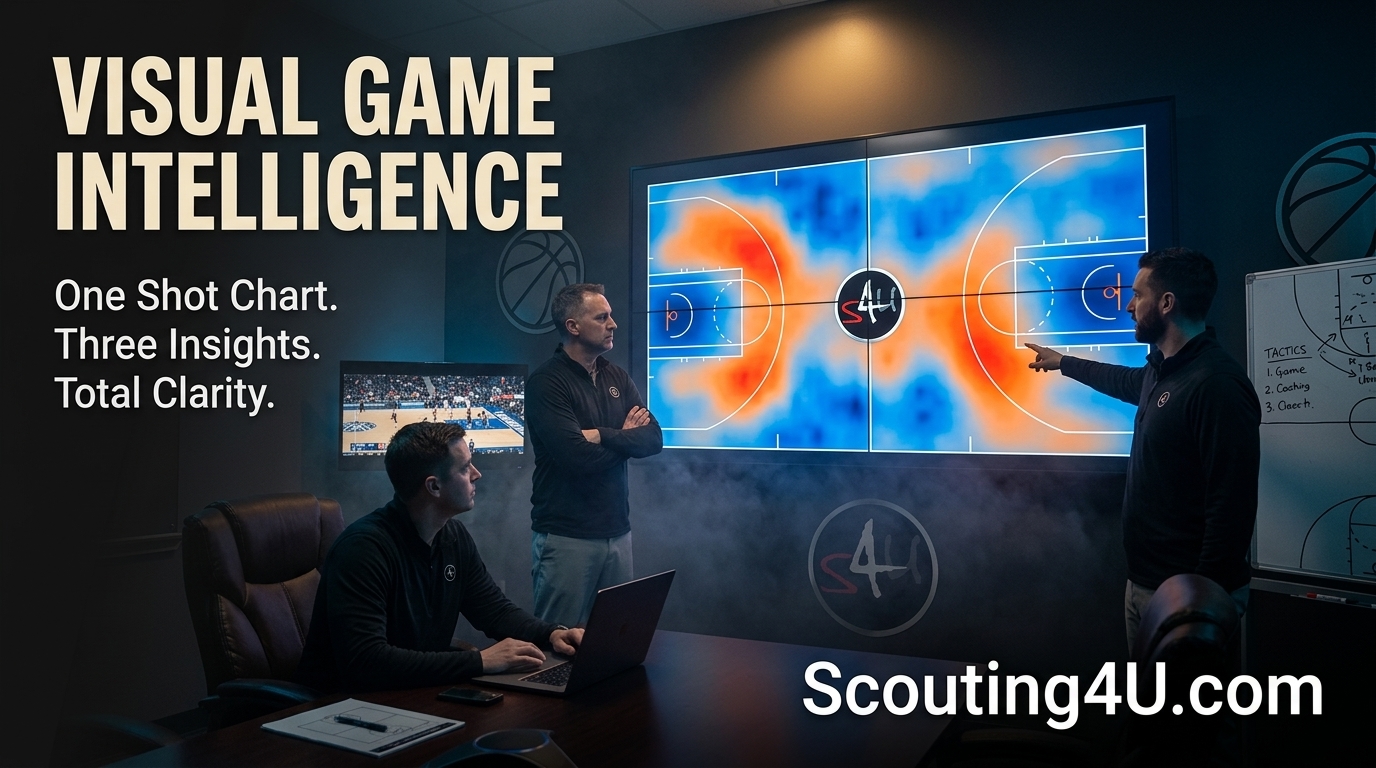
One Shot Chart. Three Insights Visual: Game Plan Revolution
Key TakeawaysA basketball shot chart three insights visual approach reveals high-efficiency zones, player tendencies, an...