

Inside an NBA Scouting Department: Talent Evaluation
Key Takeaways
An NBA scouting department drives talent evaluation and shapes team-building decisions at every level.
Modern scouting departments blend live observation with data analytics to assess players accurately.
Remote scouting tools have opened up global talent pipelines for every front office.
Platforms like Scouting4U give front offices the analytical edge they need to compete.
Introduction to an NBA Scouting Department
Every winning NBA team is built on one thing: the ability to find the right players. The NBA scouting department sits at the center of that process. It evaluates talent before draft night, identifies trade targets mid-season, and monitors international leagues year-round. Without a sharp operation in place, even well-funded franchises miss players who go on to become difference-makers.
This article breaks down how an NBA scouting department is structured, how scouts actually evaluate players, and how technology is changing the entire operation. Whether you follow the business side of basketball or work in player evaluation yourself, understanding how modern scouting departments function gives you a clearer picture of why teams succeed or fail in roster construction.
How an NBA Scouting Department Is Structured
The typical NBA scouting department has several layers. Each layer serves a specific function, and the whole system only works when those layers communicate well.
At the top sits the Director of Scouting or Vice President of Player Personnel. This person sets the department's priorities and reports directly to the General Manager. Below that role, you find lead scouts who coordinate efforts by region - North America, Europe, and other international markets.
Regional scouts cover specific territories. They attend high school games, college matchups, the NBA G League, and overseas competitions. A regional scout might watch 200 or more games in a single season. Their job is to filter the talent pool and flag players worth a closer look.
Then there are advance scouts. These staff members study upcoming opponents rather than prospective players. They build game-by-game reports on opposing teams' tendencies, sets, and personnel. Most people only think about the draft-focused side of things, but the NBA scouting department runs both tracks simultaneously - player evaluation and opponent analysis.
Finally, every modern operation now includes analytics staff. These analysts translate raw data into actionable insights, running models on shooting efficiency, defensive impact, and lineup performance. The best departments integrate the analyst's numbers with the scout's eyes-on assessment rather than treating them as competing inputs.
What an NBA Scouting Department Actually Looks For
A scout at any level is trying to answer one question: can this player help us win? The answer requires looking at multiple dimensions at once.
Physical profile matters, but it is not the whole story. Height, wingspan, and athleticism set a baseline. A guard with a 6'9" wingspan has defensive upside that a guard with a 6'2" wingspan simply does not. But plenty of players with elite measurements have failed in the NBA, and plenty of undersized players have thrived. Physical tools open doors; they do not guarantee outcomes.
Basketball IQ is harder to measure but just as important. Scouts watch how a player reads pick-and-roll coverage, where their eyes go before they catch the ball, and how they react when their first option disappears. Players who process the game quickly tend to transition well even when their athleticism is merely average.
Shot mechanics and shot selection both get scrutinized. Every NBA scouting department wants to know if a player's release is repeatable under fatigue and pressure, not just in warm-ups. They also want to know whether the player takes good shots or just a lot of shots.
For a deeper look at the specific traits scouts prioritize, this breakdown of what basketball scouts look for covers ten traits that come up consistently across every level of evaluation.
Off-court factors also enter the picture. Coachability, work ethic, injury history, and how a player responds to adversity during games all feed into the overall profile. Character information gets collected through interviews, coach references, and background checks before draft decisions are finalized.
Analytics Inside the Scouting Department
Numbers have changed what the NBA scouting department can see. A scout watching a live game can only track one or two players at a time. Data can track every player on every possession simultaneously.
Metrics like True Shooting Percentage (TS%) give a more complete picture of scoring efficiency than points per game alone. Player Efficiency Rating (PER) tries to summarize a player's overall contribution in a single number, though scouts use it as a starting point rather than a final verdict. On/off differential data shows how a team performs with a player on the court versus off it, which sometimes reveals impact that traditional stats miss entirely.
Tracking data has taken analysis even further. SportVU and Second Spectrum cameras capture movement data throughout each game. Front offices can now measure how fast a player closes out on shooters, how far they travel on cuts, and how their shot arc changes under defensive pressure.
Using a structured basketball scouting report template helps departments combine these numbers with qualitative observations in a consistent format. Without structure, reports vary too much between scouts to compare cleanly.
For front offices building out their analytical capabilities, this guide to basketball analytics covers how to apply data-driven methods to player evaluation and game preparation.
Remote Scouting and the Global Talent Pipeline
The NBA scouting department no longer relies only on scouts flying to games. Remote scouting has expanded what every team can realistically cover.
Video platforms now give scouts access to footage from leagues across Europe, Australia, South America, and beyond. A scout based in New York can watch a game from the Turkish BSL the same night it is played. This matters because international players now represent a significant portion of the league's top talent. Ignoring those leagues is no longer an option for any serious front office.
Remote evaluation also helps during the regular season when live attendance is physically limited. An advance scout cannot be in three cities at once. But a well-staffed department can divide the video load and still produce thorough reports on every upcoming opponent.
The shift to remote scouting has also lowered the barrier for smaller-budget organizations. A franchise that cannot afford a large travel budget can still build a competitive operation by investing in the right video tools and analytical platforms.
To see how this transformation is playing out across the sport, this article on remote basketball scouting covers the practical and structural changes reshaping how talent gets evaluated globally.
How Scouting4U Supports Front Office Operations
Scouting4U was built specifically for basketball evaluation. The platform brings together video, statistics, and scouting report tools in one place - exactly what a modern NBA scouting department needs to run efficiently.
Founded by Daniel Gutt, who spent years working directly in basketball scouting, the platform reflects how professional evaluation actually works rather than how someone outside the industry imagines it works. That practical grounding shows in the features.
Scouts can build detailed player profiles, tag video clips, and generate reports that combine quantitative data with qualitative notes. Departments using the platform can standardize their report format across all scouts, making it much easier to compare evaluations and reach collective decisions.
Teams looking to upgrade their operations can explore Scouting4U's subscription plans to find the right level of access for their needs. The platform scales from individual scouts all the way up to full front-office operations.
Roster Construction and the Scouting Department's Long-Term Role
Draft night gets most of the attention, but the NBA scouting department works year-round on problems that go beyond the first round of picks.
Free agency requires knowing which players on other rosters fit your system. Scouting files on potential free agent targets get built months before the window opens. Trade evaluations depend on the same information. When another team calls about a deal, the front office needs to know immediately how the offered player grades out on both skill and character.
Good scouting departments also monitor their own players for development trends and regression signals. Catching a mechanical change in a player's shot early can inform whether to invest in extension talks or begin exploring a trade.
Long-term roster planning connects directly to this evaluation work. The front office sets a direction - rebuild, contend, or maintain - and the scouting staff aligns its priorities accordingly. A team rebuilding through the draft will have its personnel staff spending far more time at college games than a contending team focused on veteran free agents.
For a broader look at how roster decisions connect to scouting work, this piece on basketball roster construction explains how the evaluation process translates into actual team-building moves.
The NBA Scouting Department in the Age of AI
Artificial intelligence is beginning to change what the NBA scouting department can process and how fast it can do so. AI tools can now generate initial player reports from statistical data in minutes rather than hours. That does not replace the scout who watches games in person, but it does free up time for human evaluators to focus on the judgments that data alone cannot make.
Pattern recognition models can flag players whose statistical profiles match previous prospects who succeeded in the NBA. Those flags serve as a starting point, and then a scout digs deeper into film and intangibles.
The risk is over-reliance. Any scouting operation that leans too heavily on models without pairing them with experienced human judgment will miss players whose value lives in areas data does not capture well - leadership, toughness, competitive instinct. The best departments treat AI as one more input, not the final word.
What is clear is that the NBA scouting department of the next decade will look different from the one operating today. The teams building that capacity now - both in human expertise and analytical infrastructure - will have a real edge when it matters most.
Frequently Asked Questions
What does an NBA scouting department do on a daily basis?
Day-to-day work involves watching game film, attending live games, writing and updating player reports, communicating with coaches and front office staff, and tracking developments in domestic and international leagues. During draft season the volume of evaluations increases significantly, but the core work runs year-round.
How many people typically work in an NBA scouting department?
Staff size varies by franchise and budget. Most operations range from 10 to 25 people when you count both player personnel scouts and advance scouts. Larger organizations with bigger analytics teams can have more. Smaller-market teams sometimes run leaner operations and compensate with better technology platforms.
How has technology changed the way an NBA scouting department operates?
Technology has expanded coverage, increased consistency, and accelerated the analysis process. Front offices can now access game footage from leagues worldwide, run statistical models on prospects automatically, and standardize report formats across their entire staff. Remote evaluation tools in particular have let teams scout far more players without proportionally increasing travel costs.
What traits does an NBA scouting department prioritize when evaluating prospects?
Most departments focus on a combination of physical tools, shooting mechanics, defensive engagement, basketball IQ, and character. No single trait is decisive on its own. A prospect who grades well across multiple categories - even if none are elite - is often valued more than a player with one exceptional skill and clear weaknesses elsewhere.
How can someone get a job in an NBA scouting department?
Entry-level roles typically require deep basketball knowledge, strong film study habits, and connections within the industry. Many scouts start as interns or video coordinators, then move into regional scouting roles over time. Building a portfolio of written reports and demonstrating analytical skills are both assets when applying. For more detail on the career path, see this guide on how to become a basketball scout.
Enjoyed this article? Share it with others!
Founder & Lead Scout, Scouting4U
2x EuroLeague champion with 30+ years in professional basketball. Daniel won EuroLeague titles with Maccabi Tel Aviv, helped build the staff behind the 2007 European Championship, and has delivered 100+ professional scouting reports across 50+ leagues. If it happened in a European basketball front office, he was probably in the room. He founded Scouting4U in 2010 to bring championship-level scouting intelligence to every club.
No reviews yet. Be the first to share your experience!
Related Articles
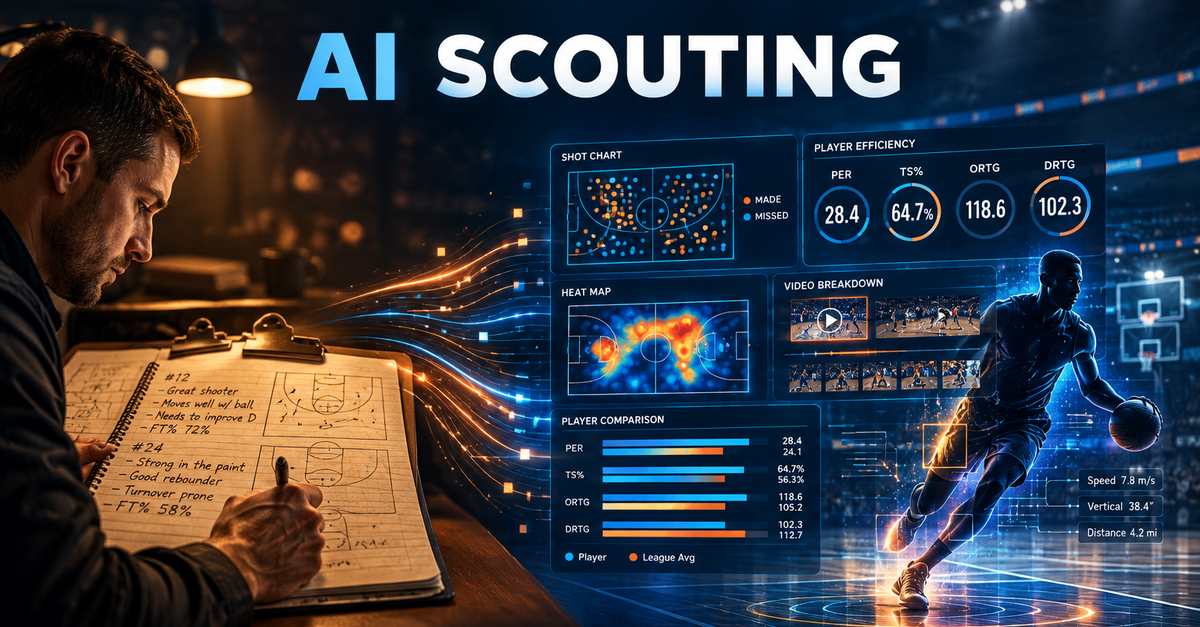
Future of Basketball Scout Reports: AI & Innovation
Key Takeaways Basketball scout reports are changing fast because of AI. Data collection and analysis now happen in a fr...
AI Scouting Reports in Basketball: The Scouting Edge
Key Takeaways AI scouting reports basketball tools give coaches faster, clearer data on players. Scouting4U pairs AI an...
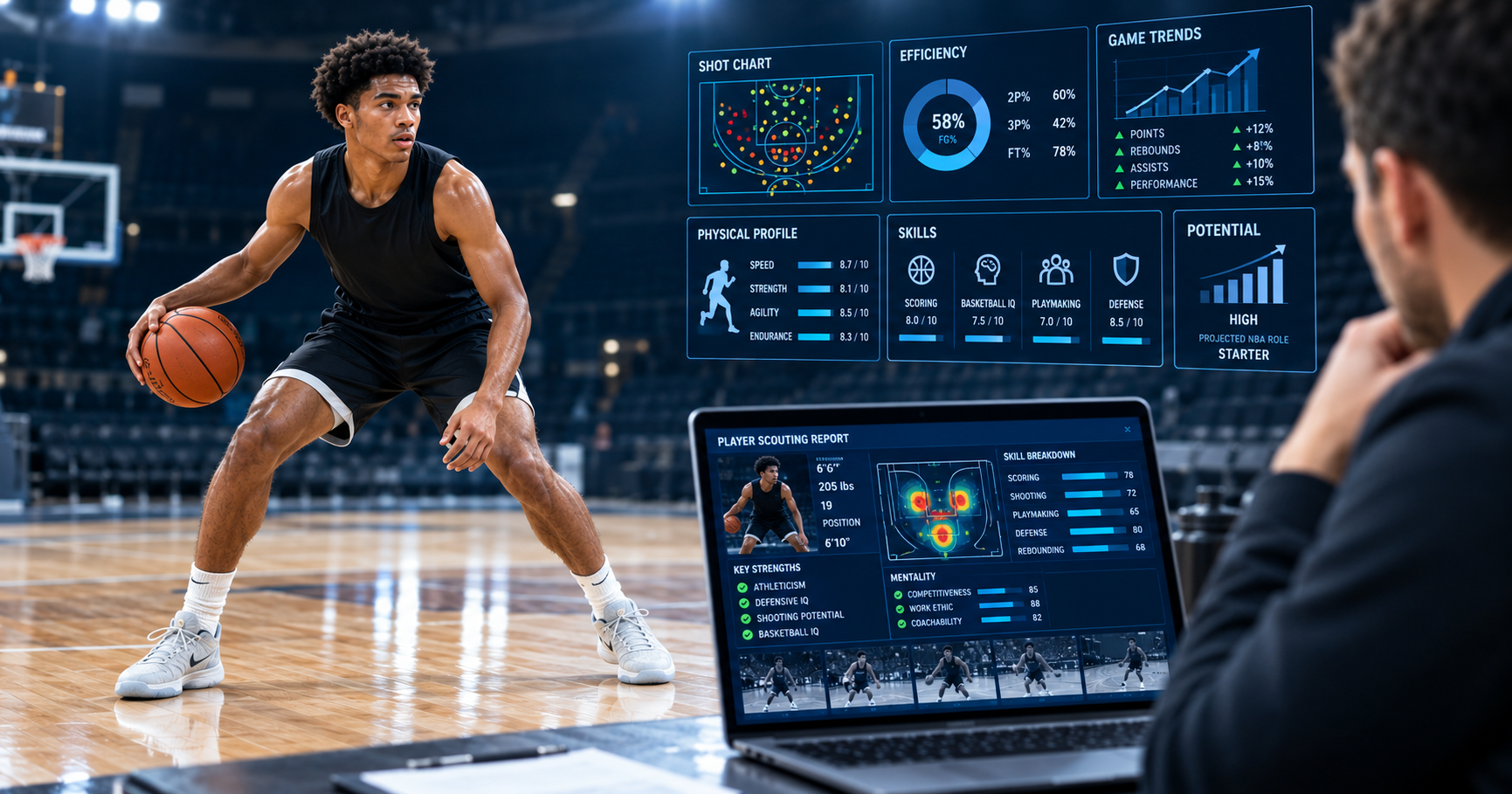
Analyzing Basketball Player Potential: Scouting Insights
Key Takeaways Analyzing basketball player potential combines data analysis with scouting intuition. Core metrics includ...