
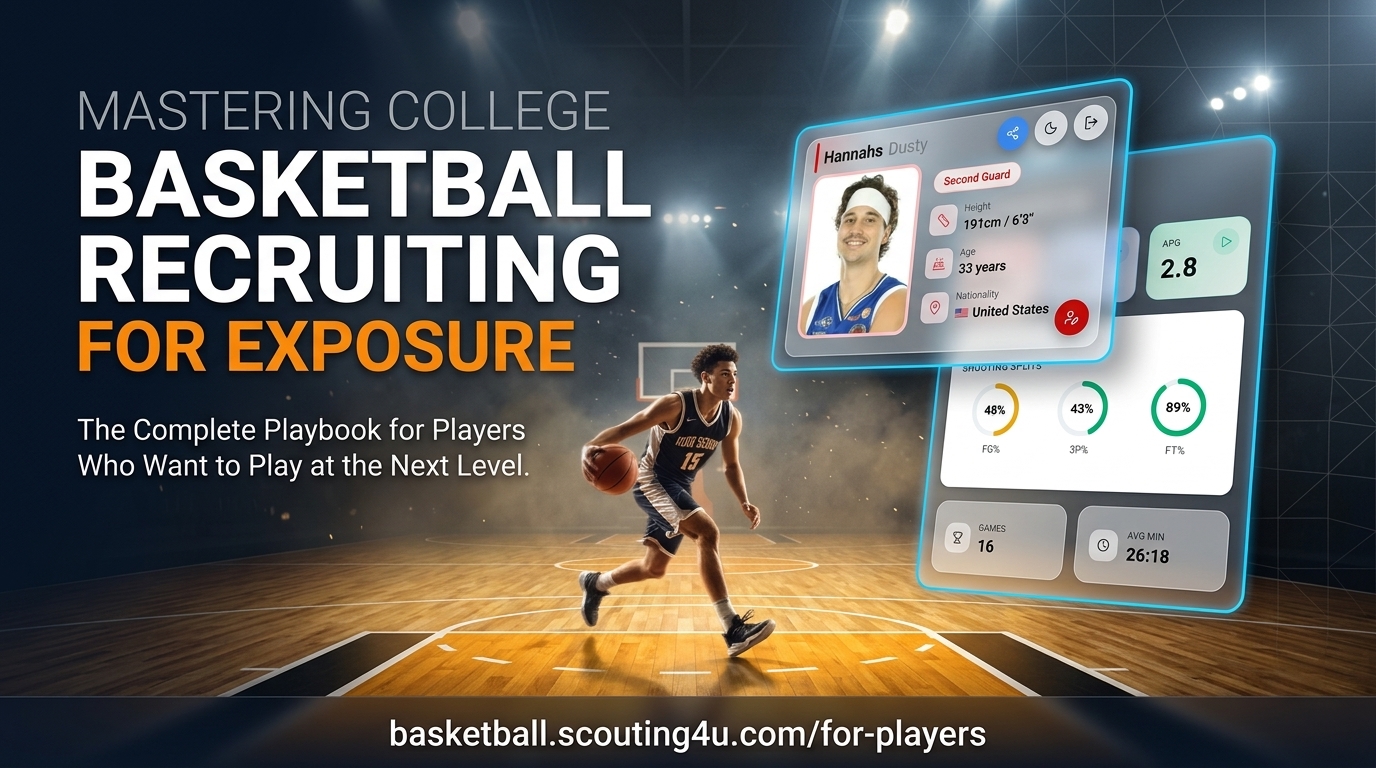
Mastering College Basketball Recruiting for Exposure
What College Basketball Recruiting Actually Demands
College basketball recruiting is more than raw talent on display. It's a system - one with specific rules, timelines, and gatekeepers. Players who understand how college basketball recruiting works gain a real advantage over those who simply show up and hope to get noticed. This guide breaks down every layer of the process: building your profile, tracking your stats, using analytics, and getting in front of the right coaches and scouts at the right time.
Key Takeaways
College basketball recruiting rewards preparation, not just athleticism.
A strong player profile is often your first impression with a college program.
Digital platforms like Scouting4U connect players directly with scouts and coaches.
Analytics give you a measurable edge when competing for roster spots.
Consistent exposure over time matters far more than a single highlight moment.
Understanding How College Basketball Recruiting Works
The college basketball recruiting process has clear stages, and knowing them helps you act at the right time. NCAA Division I programs begin evaluating players as early as ninth grade. Division II and III programs often recruit later, which can work in your favor if you're still developing.
Scouts and college coaches look for a combination of skill, coachability, academic standing, and fit within their system. College basketball recruiting isn't a passive process - you have to market yourself actively. Coaches receive thousands of inquiries each year. Without a clear, professional presentation of who you are as a player, you'll get lost in the noise.
The NCAA has strict contact rules that govern when and how coaches can communicate with recruits. Knowing these rules prevents costly mistakes. For example, college coaches cannot contact most players before September 1 of their junior year for Division I. Understanding the calendar of college basketball recruiting keeps you from wasting effort on outreach that won't land.
Building a Basketball Player Profile That Gets Noticed
Your player profile is your first point of contact with most college programs. Think of it as a resume that moves faster than you can. It needs to be accurate, current, and built around the numbers coaches actually care about.
At minimum, include your height, weight, position, graduation year, and academic GPA. Then layer in performance stats - PER, True Shooting Percentage (TS%), Offensive Rating (ORTG), and Defensive Rating (DRTG). These metrics give coaches a quick read on your efficiency and impact. A recruit who presents these numbers clearly stands out from one who only posts highlight clips.
For a detailed walkthrough on putting this together, read How to Build a Basketball Player Profile for Scouts. That guide covers exactly what information to include and how to format it for maximum impact with evaluators.
You should also have an online version of your profile that scouts can find without asking. The article How to Build a Basketball Player Profile Scouts Online goes into the specifics of building that digital presence - something that's increasingly expected in college basketball recruiting today.
Using Digital Platforms to Drive Exposure
Online visibility has changed college basketball recruiting permanently. A player in a mid-major market can now get discovered by a program across the country, provided they show up where scouts are actually searching.
Scouting4U provides a centralized platform where players build profiles, upload game film, and get connected with scouts running active searches. Rather than cold-emailing coaching staffs and hoping for a response, you're putting your information in front of people who are already looking. That's a fundamentally different dynamic.
The Scouting4U platform features include performance tracking, film tools, and direct exposure to a network of coaches and scouts. For players navigating college basketball recruiting without an AAU program or private recruitment service, this kind of platform access levels the playing field considerably.
Social media matters too, but it needs to be handled carefully. Keep your profiles professional. Coaches look, and what they see informs their impression of you as a person, not just a player.
The Stats That Drive College Basketball Recruiting Decisions
Data has become central to how college programs evaluate players. This is especially true at the Division I level, where analytics departments now feed information directly to recruiting coordinators.
The numbers that carry the most weight in college basketball recruiting include:
Player Efficiency Rating (PER) - a single number summarizing per-minute production
True Shooting Percentage (TS%) - measures shooting efficiency across twos, threes, and free throws
Offensive and Defensive Rating - points scored and allowed per 100 possessions when you're on the floor
Assist-to-Turnover Ratio - signals decision-making quality for ball handlers
Rebounding Rate - how often you grab available rebounds at each end
Tracking these consistently across a season gives coaches real evidence of your development trajectory, which matters just as much as current performance. Our guide on 7 Basketball Stats Players Should Track for Success breaks down exactly how to measure and present these numbers.
Beyond tracking, you need to understand what your stats mean relative to your competition level. A 22-point average in a weak conference reads differently than 14 points against top-level opponents. College basketball recruiting evaluators know this, so contextualize your numbers honestly.
How Analytics Give You a Recruiting Edge
Analytics have reshaped college basketball recruiting from both sides. Coaches use data to build rosters more efficiently. Players who understand that same data can position themselves more effectively.
When you know your strengths in measurable terms - not just "I'm a good defender" but "my defensive rating over 30 games was 94" - you can target programs whose systems need what you offer. A program that struggles to defend the pick-and-roll, for instance, should be hearing from guards with strong coverage metrics. You can read more about that kind of film breakdown in How to Analyze Pick-and-Roll Defense Coverage.
Platforms like Scouting4U make this kind of self-analysis accessible without needing a personal analytics staff. The tools let you see your own performance data the same way a college scout would. Check the Scouting4U subscription plans to see which tier fits your current stage in college basketball recruiting.
Preparing for Combines and Scouting Events
College basketball recruiting doesn't happen only through film and profiles. In-person evaluation events - combines, showcases, and camps - remain important, particularly for players looking to move between levels or establish themselves on a national radar.
At these events, coaches measure what film can't always capture: athleticism, effort, coachability under live instruction, and how you perform when you know scouts are watching. Preparation matters significantly. Players who arrive without understanding what's being tested often underperform against players with less raw ability.
Our article on Basketball Combine Preparation: What Scouts Measure covers the specific drills, measurements, and behavioral signals that evaluators focus on. Knowing this going in lets you prepare with intent rather than just showing up.
Showcases and AAU tournaments serve a similar function. College basketball recruiting coordinators map their travel schedules around specific events. Find out which events draw the programs you're targeting, then make sure you're competing there.
The Long Game: Consistency Over Highlight Moments
One strong performance rarely changes a recruit's situation on its own. College basketball recruiting decisions are usually built over months of evaluation. Coaches want to see that you perform when the team needs you, that you compete hard in losses, and that your stats hold up across different opponents.
This means treating every game as a data point. It means maintaining your academic standing so you remain eligible. It means following up with coaches after you reach out, because persistence - handled professionally - signals maturity.
If you're earlier in your development and want a structured plan for building toward college basketball recruiting readiness, the guide on Creating a Youth Basketball Development Plan That Works provides a concrete framework organized by age and skill stage.
Players who get recruited at the level they want have almost always put in disciplined, unglamorous work over years - not just a few good weeks before a big showcase.
What College Coaches Actually Want
Beyond the statistics and film, college basketball recruiting comes down to fit. Coaches are building teams, not just collecting talent. A program running a motion offense needs different pieces than one built around post play. A coach who prioritizes defense evaluates players differently than one whose identity is pace and spacing.
Research the programs you're targeting. Watch their games. Understand their system. When you reach out, reference specific aspects of their style and explain where you fit within it. That specificity tells a coach you've done the work - and it makes your outreach stand out from generic emails that coaches delete without reading.
Character also gets evaluated. How do you respond to a mistake in the fourth quarter? How do you treat teammates during drills? College basketball recruiting happens in full view, including the moments you think no one is watching.
Taking Action on Your Recruiting Journey
College basketball recruiting rewards players who take ownership of their own process. Build your profile now, even if your target schools haven't noticed you yet. Start tracking your stats this season so you have a full year of data to present. Get on a platform like Scouting4U where the infrastructure for college basketball recruiting exposure already exists.
If you want to understand the full scouting picture - what evaluators look for, how they structure their reports, and what separates a yes from a no in college basketball recruiting - the guide at Basketball Scouting: The Definitive Guide for Modern Scouts gives you the scout's perspective in full detail.
College basketball recruiting doesn't wait for you to feel ready. The players who get offers are the ones who started preparing before anyone told them to.
Frequently Asked Questions
When does college basketball recruiting start for most players?
Division I programs can begin evaluating players as early as freshman year of high school. Official contact, however, is restricted until September 1 of a recruit's junior year under current NCAA rules. Division II and III programs typically begin serious recruiting later, often during the junior or senior year. Starting your profile and exposure work early gives you more runway, regardless of which level you're targeting.
What stats matter most in college basketball recruiting?
The metrics coaches rely on most heavily include Player Efficiency Rating (PER), True Shooting Percentage (TS%), Offensive and Defensive Rating per 100 possessions, and assist-to-turnover ratio for guards. Rebounding rate matters for big men and wings. Raw scoring averages are less persuasive than efficiency numbers, because college basketball recruiting evaluators adjust for competition level and usage rate.
How does a digital player profile help with college basketball recruiting?
A digital profile lets scouts and coaches find you on their own schedule, without waiting for a live event. It gives them a complete picture - stats, film, academic information, and contact details - in one place. Platforms like Scouting4U are built specifically for this purpose, putting your profile in front of evaluators who are actively searching for players at your position and level.
How many programs should I contact during college basketball recruiting?
There's no single right number, but casting too narrow a net is a common mistake. Most players should be in active communication with 15-30 programs across multiple levels. Target schools where you fit the system, meet the academic requirements, and have a realistic chance of contributing. A well-researched outreach to 20 programs will outperform a generic blast to 100 every time in college basketball recruiting.
Can analytics software really improve my recruiting chances?
Yes, for a straightforward reason. College basketball recruiting decisions increasingly run on data. Players who arrive at conversations with coaches already knowing their efficiency metrics, their defensive impact numbers, and how those figures compare to other recruits come across as serious and self-aware. Platforms like Scouting4U give players access to the same kind of analytical view that college programs use internally. That preparation shows.
Enjoyed this article? Share it with others!
Founder & Lead Scout, Scouting4U
2x EuroLeague champion with 30+ years in professional basketball. Daniel won EuroLeague titles with Maccabi Tel Aviv, helped build the staff behind the 2007 European Championship, and has delivered 100+ professional scouting reports across 50+ leagues. If it happened in a European basketball front office, he was probably in the room. He founded Scouting4U in 2010 to bring championship-level scouting intelligence to every club.
No reviews yet. Be the first to share your experience!
Related Articles
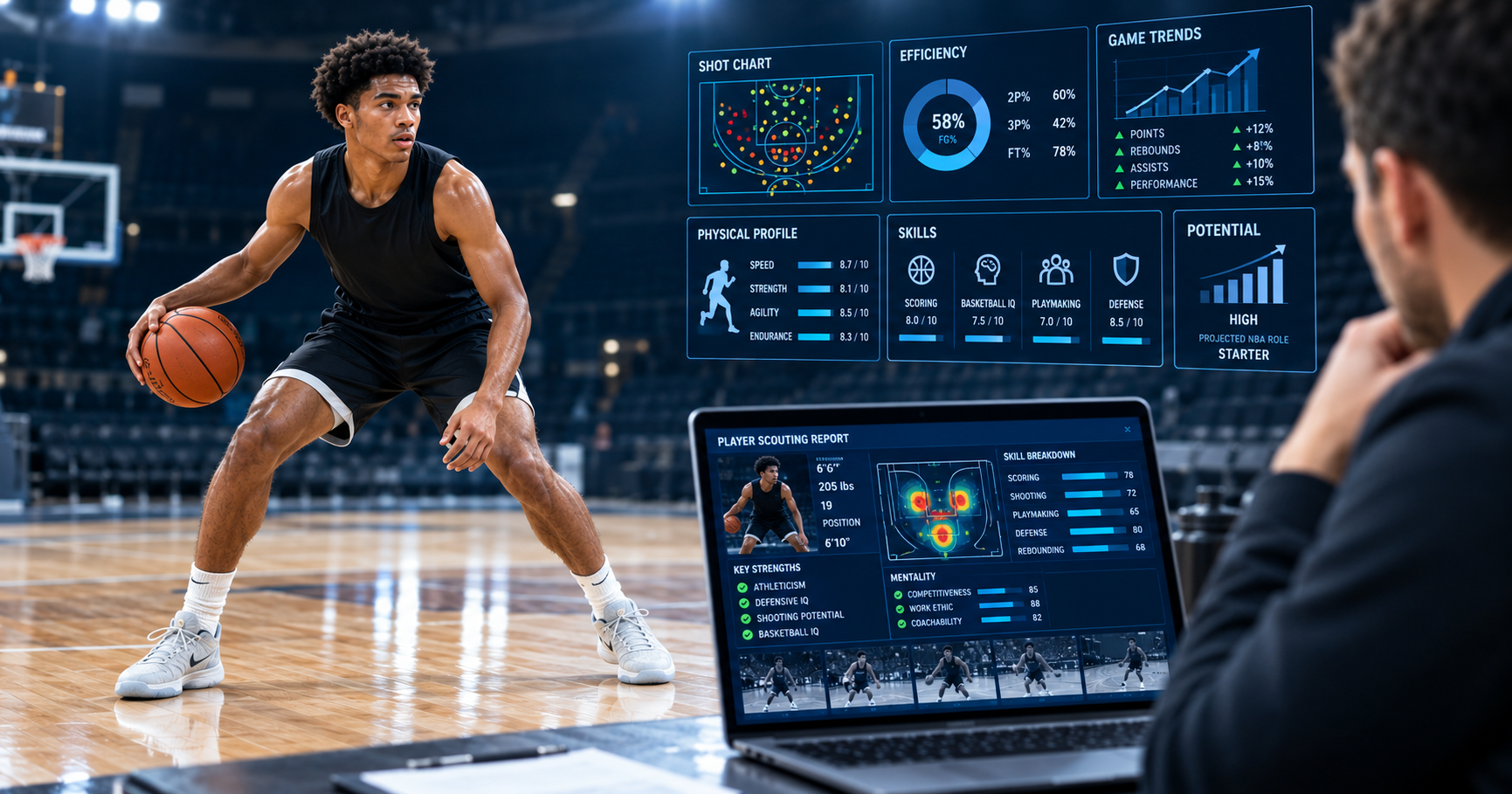
Analyzing Basketball Player Potential: Scouting Insights
Key Takeaways Analyzing basketball player potential combines data analysis with scouting intuition. Core metrics includ...
Mastering Basketball Service: Scouting Insights & Tools
Key TakeawaysA strong basketball service covers everything from player evaluation to game strategy analysis.Scouting4U g...
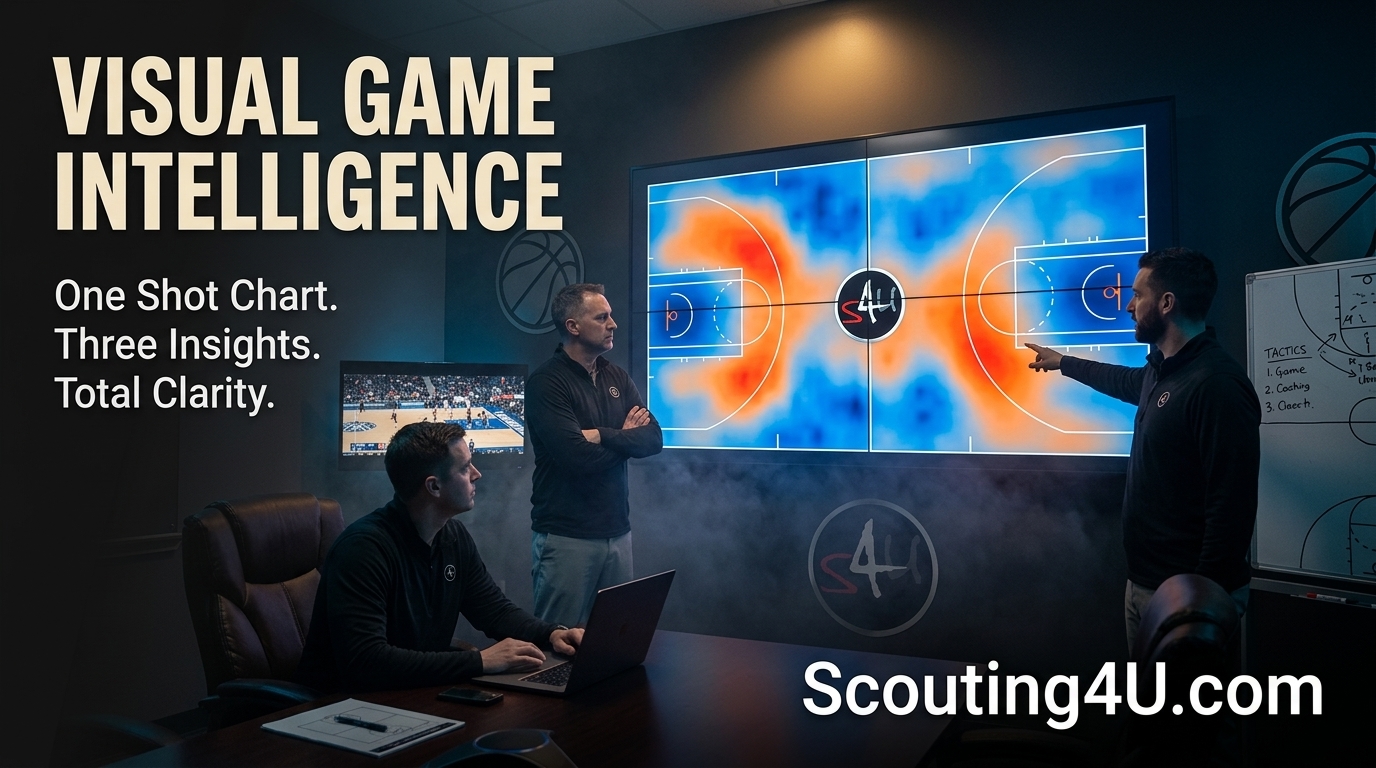
One Shot Chart. Three Insights Visual: Game Plan Revolution
Key TakeawaysA basketball shot chart three insights visual approach reveals high-efficiency zones, player tendencies, an...