
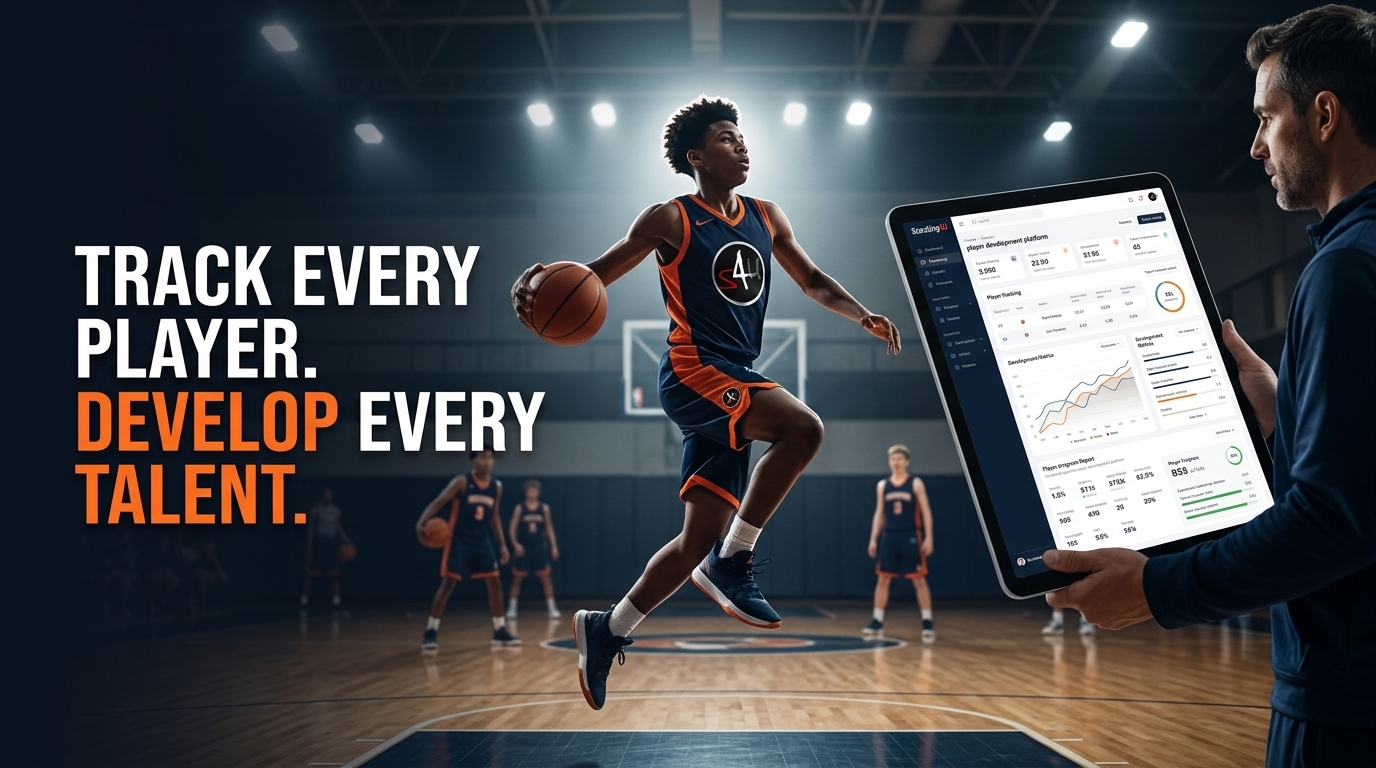
Remote Basketball Scouting: Transforming Talent Evaluation
Key Takeaways
Teams can evaluate talent worldwide without travel costs using remote scouting tools.
Platforms like Scouting4U give scouts access to video, analytics, and player data in one place.
Metrics like PER, True Shooting %, and Usage Rate are standard tools in remote evaluation.
Scouting players remotely expands the talent pool and helps teams find undervalued prospects.
AI and machine learning are changing what scouts can do at scale without leaving their desks.
Introduction to Remote Basketball Scouting
Remote basketball scouting has changed how teams find and evaluate players. Not long ago, a scout had to sit in a gym to watch a prospect. Now, the same evaluation happens from a laptop, using video feeds, advanced stats, and AI-generated reports. This approach is no longer a workaround - it is the standard for many professional and semi-professional organizations.
This shift matters because talent does not concentrate in one place. A guard playing in the Lithuanian league, a forward in Argentina, or a center at a small American college can all be evaluated through the same process. The geographic barrier is gone. What remains is the need for good tools, disciplined methodology, and clear evaluation criteria.
This guide covers how remote basketball scouting works in practice, what tools support it, what scouts actually look for, and how organizations at different levels can use it effectively.
Why Remote Basketball Scouting Matters Now
Travel budgets for scouting departments have always been limited. A mid-level European club cannot send scouts to ten different countries to watch prospects play. Remote basketball scouting solves that problem directly. Teams can monitor dozens of players at once, across multiple leagues, without booking a single flight.
The practical benefits go beyond cost. This approach gives organizations a longer observation window. Instead of watching a player in two or three live games, a scout can pull up thirty games of footage, filter by situation type, and build a complete picture of how that player performs under pressure, off the ball, and in late-game scenarios.
There is also the question of speed. When a roster spot opens up mid-season, remote evaluation lets a front office respond in days rather than weeks. The data is already there. Reports can be generated quickly. Decisions get made faster, and the team does not lose a signing window because logistics slowed everything down.
For smaller organizations without large scouting staffs, remote basketball scouting effectively multiplies capacity. One scout using the right platform can cover far more ground than three scouts traveling to games separately.
Tools and Technology That Power Remote Evaluation
The technology behind remote basketball scouting has matured significantly. A few years ago, remote evaluation meant watching grainy video and pulling stats from third-party sites that didn't always agree with each other. Today, integrated platforms handle video, statistics, and report generation in one workflow.
Scouting4U is one of the more established platforms in this space. Founded by EuroLeague expert Daniel Gutt, it was built specifically for basketball scouting rather than adapted from a general sports analytics tool. The platform connects video footage with player statistics and lets scouts build detailed reports without switching between multiple systems. You can explore the full range of tools on the Scouting4U platform features page.
Key technology categories that support remote scouting include:
Video analysis tools with tagging and timestamping features
Statistical databases covering international leagues
AI-assisted report generation that speeds up the write-up process
Player comparison tools that put prospects side-by-side on the same metrics
Scouting report templates that enforce consistency across a department
Consistency matters a lot in remote basketball scouting. When reports follow a standard structure, decision-makers can compare evaluations across scouts, leagues, and time periods. Our Basketball Scouting Report Template guide covers how to build that consistency into your workflow.
AI is also changing what scouts can do at scale. Automated tagging of plays, pattern recognition across large video libraries, and real-time report drafting are all becoming part of standard practice. These tools do not replace the scout's judgment - they free up time so the scout can spend more of it on actual evaluation.
What Remote Basketball Scouting Actually Evaluates
The criteria scouts apply remotely are the same as in-person. What changes is how they gather evidence for each one.
Most evaluations in remote basketball scouting cover the following areas:
Athleticism and physical tools - Height, wingspan, speed, and explosiveness can be assessed from video, though contact situations and physical strength are harder to judge at a distance.
Basketball IQ - Decision-making, off-ball movement, defensive positioning, and reading the game are all visible in game footage. Scouts can rewatch the same sequence multiple times, which is something in-person observation never allows.
Scoring ability - Shot mechanics, shot selection, and creation off the dribble come through clearly in video analysis.
Defense - Defensive evaluation is tougher remotely because broadcast cameras often follow the ball. Scouts need multi-angle footage or specific defensive clips to do this properly. Our guide on Basketball Defensive Scouting goes deeper on what to look for.
Statistical production in context - Raw numbers don't tell the whole story. A scout has to understand what league a player competed in, what role they had, and what their team's system looked like. A 20-point average in a weak league means something different than 12 points on a top team with heavy shot creation responsibilities.
The metrics used most often include Player Efficiency Rating (PER), True Shooting Percentage (TS%), Usage Rate (USG%), and defensive metrics like Defensive Rating. Understanding what basketball scouts look for in a player gives context to why each metric matters in the first place.
Building a Remote Basketball Scouting System for Your Organization
Random video watching is not remote basketball scouting - it is just watching video. The difference is process. Organizations that get results from this approach build a repeatable system around it.
Start with a defined player pool. Scouting works best when scouts have a clear scope - specific positions, leagues, age ranges, or contract situations. Trying to scout everyone leads to evaluating no one well.
Set up a consistent report format. Every evaluation should capture the same data points. This lets you build a database over time and compare players across different scouting cycles. If your organization is building out that database, our guide on creating a basketball player scouting reports database is a practical starting point.
Schedule regular review sessions. Remote basketball scouting generates a lot of data, but it only becomes useful when decision-makers sit down to act on it. Weekly or bi-weekly reviews keep the process moving and ensure the work actually informs roster decisions.
Track your evaluations over time. One of the real advantages here is that the data does not disappear. A scout who evaluated a player two years ago can pull up that report, compare it to what the player has become, and calibrate their evaluation criteria accordingly. That feedback loop makes scouts better over time.
How This Approach Works Across Different Levels
Remote basketball scouting is not just for NBA front offices. The same approach applies at different levels of the game, though the tools and depth of analysis may vary.
At the professional level - NBA, EuroLeague, national leagues - remote scouting is already standard. Teams maintain full-time scouting staffs that use integrated platforms, maintain player databases, and produce detailed reports on a regular schedule.
College programs use remote tools to evaluate international prospects and players in secondary markets who might not draw in-person attention. The recruiting rules in college basketball also make remote evaluation more practical for initial screening before a coach travels to watch someone live.
Independent scouts and agents use these same methods to build their own player databases and provide value to teams or represent clients in contract negotiations. A well-documented evaluation history on a player carries real weight in those conversations.
For anyone looking to develop a career around remote basketball scouting, our guide on how to become a basketball scout covers the career path in detail.
The Global Reach of Remote Basketball Scouting
One of the clearest wins from this approach is geographic reach. The EuroLeague, Liga ACB, LNB Pro A, Turkish BSL, and dozens of other leagues are now accessible to scouts who would previously have had to choose which market to cover based on travel budgets.
This matters because talent distribution is genuinely global. The NBA has players from over 40 countries. European clubs regularly sign players from South America, Australia, and Africa. Remote basketball scouting makes it practical to maintain coverage across all of these markets at the same time.
It also creates competitive advantages for organizations willing to look where others don't. A team that systematically covers secondary leagues - markets that don't get heavy scouting attention - can identify undervalued players before they attract interest from larger organizations. That is how smaller budgets compete with bigger ones.
The European basketball transfer market is one area where remote scouting gives teams real leverage. Transfer windows move fast, and organizations with existing coverage of European leagues can act quickly when opportunities arise.
If you are ready to see what a full remote setup looks like in practice, Scouting4U's subscription plans are built for organizations at every level, from individual scouts to full front office departments.
Frequently Asked Questions
What is remote basketball scouting?
Remote basketball scouting is the practice of evaluating players using video footage, statistics, and analytics platforms rather than attending games in person. It lets scouts assess talent from anywhere in the world without travel, using tools that combine game film, performance data, and reporting systems in one workflow.
What tools do scouts use for remote basketball scouting?
The main tools include video analysis platforms with tagging features, statistical databases covering international leagues, AI-assisted report generators, and customizable scouting report templates. Platforms like Scouting4U integrate all of these in one place, which reduces the time scouts spend switching between systems.
What metrics matter most in remote basketball scouting?
Player Efficiency Rating (PER), True Shooting Percentage (TS%), and Usage Rate (USG%) are commonly used. Defensive rating, assist-to-turnover ratio, and rebounding rate are also standard. The key is reading these numbers in context - accounting for the player's role, league level, and team system.
Can remote basketball scouting replace in-person evaluation entirely?
For most initial screening and ongoing monitoring, yes. For final decisions on major signings, most organizations still want at least some in-person observation - particularly to assess physicality, locker-room presence, and how a player responds to live competitive situations. Remote scouting handles the heavy lifting of identification and analysis; in-person visits confirm what the data suggests.
How do I start building a remote basketball scouting system?
Define your target player pool first - positions, leagues, age ranges. Then set up a consistent report format so evaluations are comparable over time. Use a platform that combines video and statistics. Schedule regular review sessions so the scouting work actually informs decisions. Start narrow, build depth, then expand your coverage as the system proves out.
Enjoyed this article? Share it with others!
Founder & Lead Scout, Scouting4U
2x EuroLeague champion with 30+ years in professional basketball. Daniel won EuroLeague titles with Maccabi Tel Aviv, helped build the staff behind the 2007 European Championship, and has delivered 100+ professional scouting reports across 50+ leagues. If it happened in a European basketball front office, he was probably in the room. He founded Scouting4U in 2010 to bring championship-level scouting intelligence to every club.
No reviews yet. Be the first to share your experience!
Related Articles
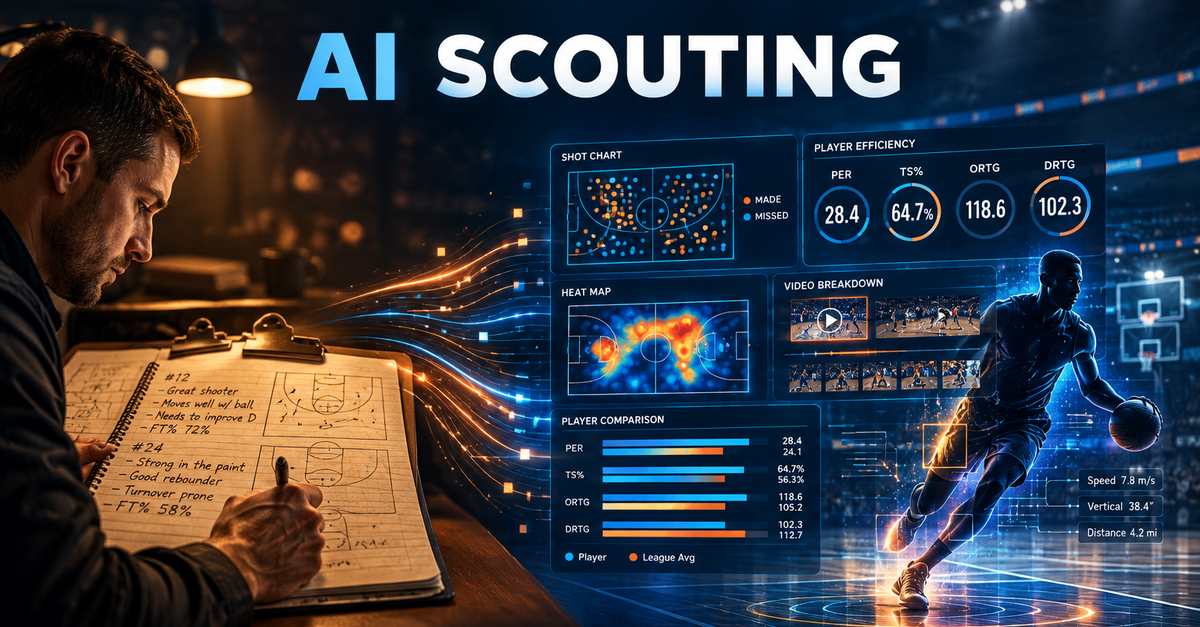
Future of Basketball Scout Reports: AI & Innovation
Key Takeaways Basketball scout reports are changing fast because of AI. Data collection and analysis now happen in a fr...
AI Scouting Reports in Basketball: The Scouting Edge
Key Takeaways AI scouting reports basketball tools give coaches faster, clearer data on players. Scouting4U pairs AI an...
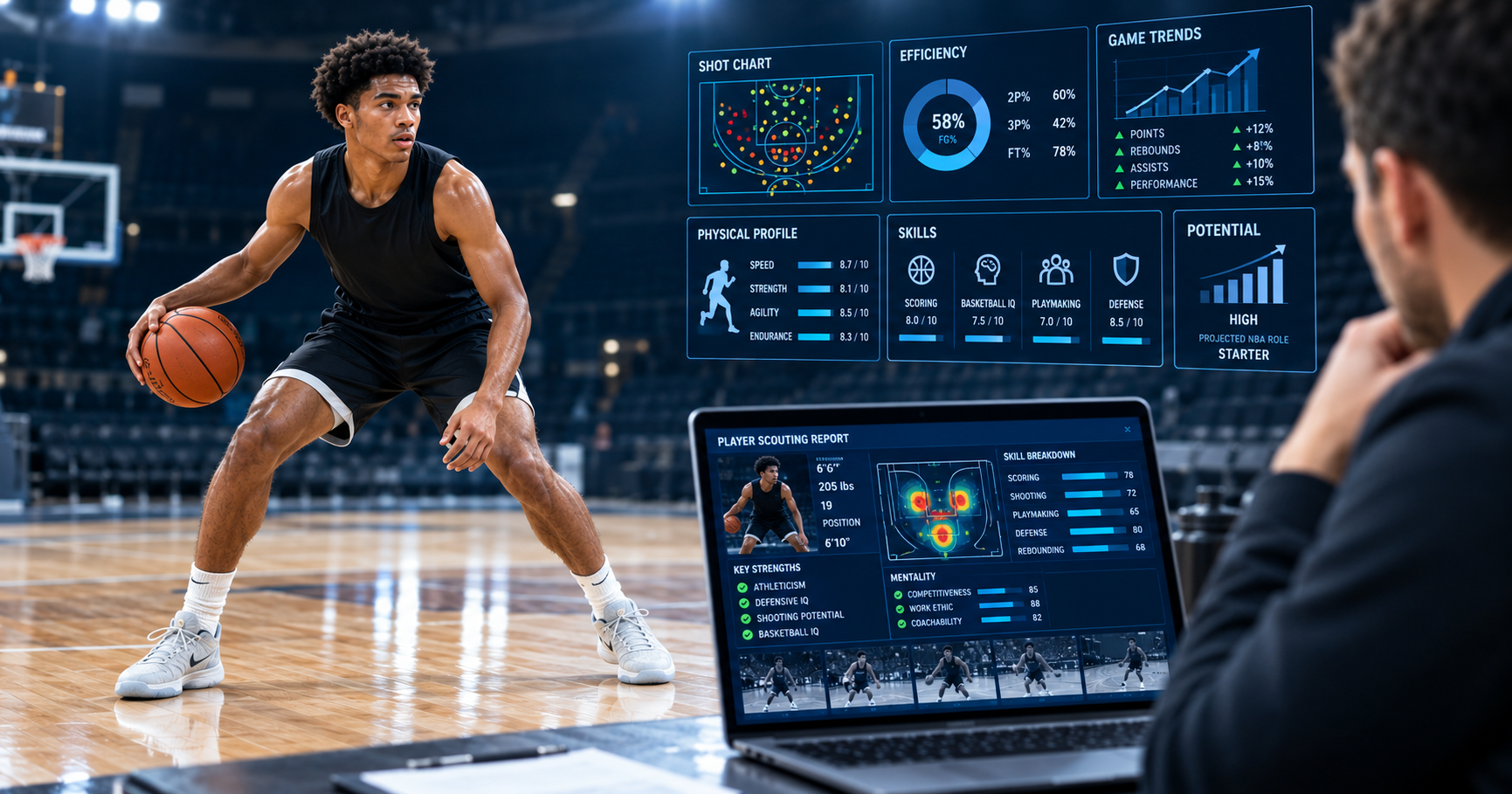
Analyzing Basketball Player Potential: Scouting Insights
Key Takeaways Analyzing basketball player potential combines data analysis with scouting intuition. Core metrics includ...