
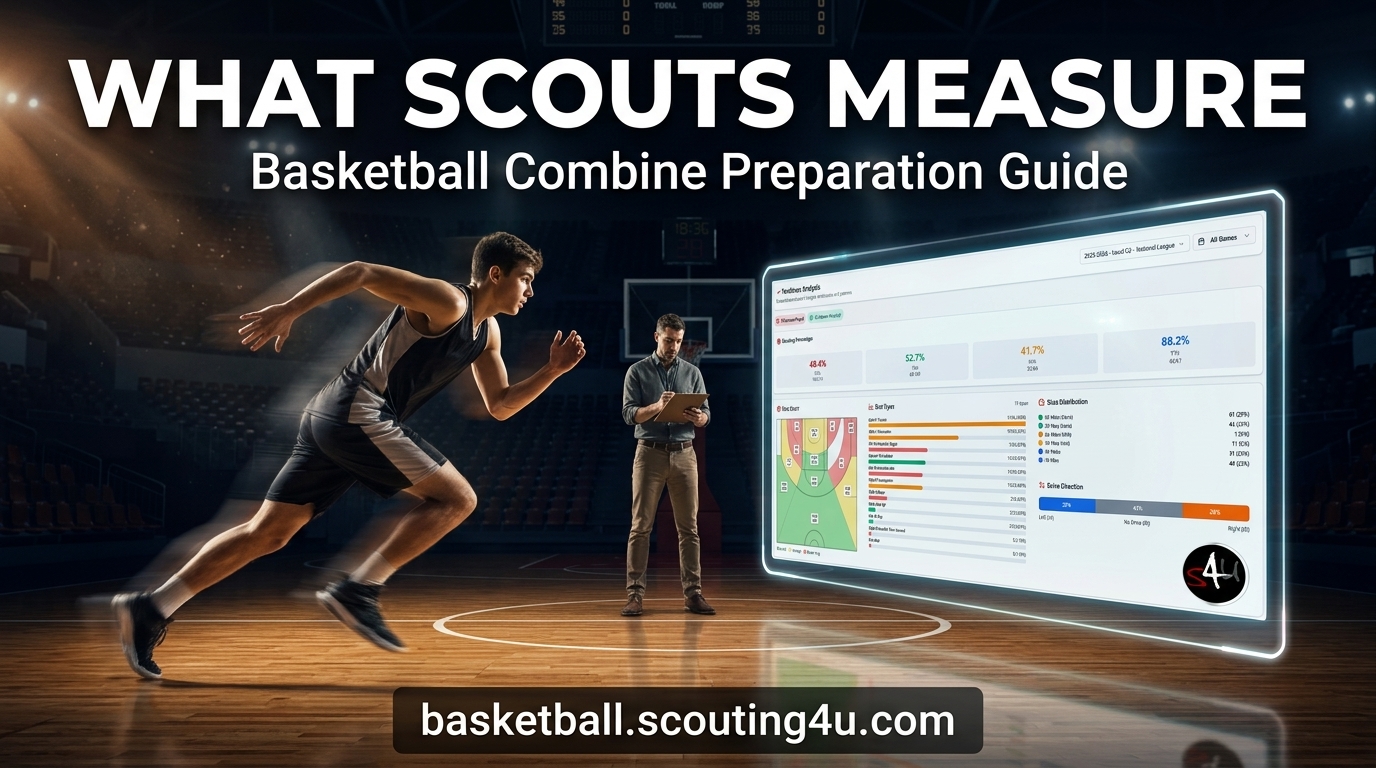
Basketball Combine Preparation: What Scouts Measure
What Is Basketball Combine Preparation?
Basketball combine preparation is the structured process of getting ready to perform in front of scouts - physically, technically, and mentally. It is one of the most important steps a player can take when trying to break into professional or semi-professional basketball. Done right, basketball combine preparation separates players who get callbacks from those who get overlooked.
This guide covers what scouts actually measure, how to train for each test, and what tools help you track real progress. Whether you are heading into the NBA Draft Combine, a European club tryout, or a regional showcase, the principles of basketball combine preparation stay the same.
Why Basketball Combine Preparation Matters to Scouts
Scouts do not just watch you play. They measure you. Basketball combine preparation matters because scouts use combine data to rank players across positions, project development potential, and make roster decisions. A raw athlete who prepared poorly can lose a spot to a less gifted player who showed up ready.
At Scouting4U, we have watched hundreds of players go through European combines and pro tryouts. The ones who thrive share one thing: they treated basketball combine preparation as a months-long process, not a week of cramming.
If you want to understand how scouts think before you set foot on the court, read our breakdown of basketball scouting from the scout's perspective. Knowing what scouts prioritize will shape how you prepare.
Physical Measurements: What Gets Tested First
The first phase of any combine is physical measurement. Scouts record height, weight, wingspan, standing reach, and hand size. These numbers go straight into a database and follow you throughout your career. You cannot change your wingspan - but you can control your body composition, explosiveness, and conditioning.
Standard physical tests in basketball combine preparation include:
Standing vertical jump - measures lower-body power without a run-up
Max vertical jump - measures explosion with a full approach
Lane agility drill - tests lateral quickness and change of direction
Three-quarter court sprint - measures straight-line speed and acceleration
Bench press reps (at NBA level) - tests upper-body strength at 185 lbs
Each of these has a training response. Lane agility improves with defensive slide drills and resistance band work. Vertical jump responds to plyometric training and proper rest. Start these 12 to 16 weeks out from your combine date. Do not wait until the month before.
For specific data on what scouts look for at the NBA level, our article on NBA combine measurements and analytics breaks down the benchmarks position by position.
Technical Skills: The Basketball-Specific Tests
Physical numbers get you in the building. Technical skills keep you there. This part of basketball combine preparation is where most players can close the gap with more talented athletes through focused work.
Scouts watch for:
Shooting mechanics and accuracy - catch-and-shoot from multiple spots, pull-up off the dribble, free throws under fatigue
Ball handling - control at speed, under pressure, and with the weak hand
Passing decisions - reads in two-on-one and pick-and-roll situations
Defensive positioning - foot speed, help rotations, and on-ball technique
Post and footwork (bigs only) - drop steps, up-and-unders, and seal positions
The goal is not to show everything you can do. It is to perform your best skills without hesitation. Scouts are watching reaction time as much as the result. A clean, quick decision on a bad shot attempt reads better than a slow, uncertain layup.
If you want a framework for grading your own technical game before the combine, our basketball skills assessment guide gives you a method to evaluate yourself the way scouts do.
Mental Preparation: The Part Most Players Skip
Every player who walks into a combine is nervous. Scouts know this. What they are looking for is how you handle that pressure - do you speed up and force plays, or do you stay controlled and make reads?
Basketball combine preparation must include mental reps. Simulate pressure in practice. Ask your coaches to run timed drills where the whole team is watching. Run five-on-five with a scout or coach calling out your name. Get comfortable performing when attention is on you.
A few practical tactics that work:
Visualize specific combine drills the night before - not outcomes, but process
Use a pre-performance routine (breathing, movement, a cue phrase) to anchor focus
After each drill, reset immediately rather than replaying errors
Set personal performance goals instead of comparison goals (hit 70% on shooting, not "beat everyone else")
Mental toughness is not some abstract quality. It shows up in whether you rush the next play after a turnover, or whether you stay disciplined. Scouts track this even when you think they are not watching.
Tracking Stats During Basketball Combine Preparation
You need data on yourself before scouts collect data on you. The players who show up to combines with tracked improvement over 12-plus weeks look different from those who just trained hard with no measurement.
Track at minimum:
Shooting percentages by zone and shot type
Turnover rate in practice scrimmages
Vertical jump progress week over week
Lane agility times each training block
Assist-to-turnover ratios in live play
This data does two things. First, it tells you if your training is actually working. Second, it gives you specific numbers to reference when talking to scouts. "My catch-and-shoot percentage from the corner went from 38% to 54% over 10 weeks" is more convincing than "I've been working on my shot."
For a deeper look at which stats carry the most weight with evaluators, check out our article on the 7 basketball stats players should track for success.
Building Your Player Profile Before the Combine
Scouts research players before the combine starts. Your profile - whether on a scouting platform, a personal highlight reel, or a team roster page - shapes their first impression. Basketball combine preparation should include building this profile deliberately.
A strong player profile includes:
Current physical measurements and test results
Game film with clear date and opponent labeling
Stats from verified competition, not just practice
A short bio covering your playing history and goals
Film quality matters more than people expect. A 90-second highlight of your best plays in real game situations beats a 10-minute raw footage dump every time. Scouts are busy. Make their job easier and they will spend more time on your file.
Using Analytics Tools in Basketball Combine Preparation
Analytics tools have changed how players prepare. You no longer need a full coaching staff to identify your weaknesses. Platforms like Scouting4U give players and agents access to video analysis, stat tracking, and comparative data that used to exist only inside pro organizations.
During basketball combine preparation, use analytics to:
Break down your own film for shot selection patterns
Compare your numbers to players at the level you are targeting
Identify defensive breakdowns you repeat under pressure
Build a statistical narrative around your best attributes
Scouting4U's platform, built on Daniel Gutt's EuroLeague scouting background, is designed specifically for this kind of player-level preparation. If you want to see what tools are available, visit the Scouting4U platform features page or check the subscription plans to find the right tier for your situation.
The Timeline: When to Start Basketball Combine Preparation
Start earlier than you think you need to. Most combine coaches recommend a 16-week preparation window at minimum. Here is how to think about that time:
Weeks 1-4: Baseline testing and gap identification. Run every physical test. Film yourself in live play. Identify your three weakest measurables.
Weeks 5-10: Targeted skill and physical development. Focus on your gaps while maintaining your strengths. Track numbers weekly.
Weeks 11-14: Integration work. Practice combine drills specifically. Simulate the combine environment with timed tests and observers.
Weeks 15-16: Taper and sharpen. Reduce volume. Sharpen your mental routine. Finalize your player profile and film package.
Players who compress this into four weeks often make physical gains but show up mentally underprepared. The drills feel unfamiliar. The pressure catches them off-guard. Basketball combine preparation takes the full timeline to work properly.
Common Mistakes That Hurt Your Combine Performance
A few patterns come up repeatedly with players who underperform at combines despite good raw ability:
Training only their strengths. If you are already a good shooter, spending 80% of your prep on shooting does not raise your ceiling - it just confirms what scouts already expected. Work the gaps.
Ignoring body composition. Scouts take height and weight at check-in. Showing up 15 pounds heavier than your listed weight raises questions about discipline and conditioning. If you are cutting weight, do it gradually over the full prep window.
No game-speed reps. Drills at half-speed do not transfer. Your basketball combine preparation needs live scrimmages and competitive settings throughout the full window, not just at the end.
Weak film package. If scouts cannot find recent, high-quality footage of you in competitive games, they move on. Update your film before the combine, not after.
Conclusion
Basketball combine preparation is a process that rewards players who plan ahead, track their numbers, and show up with a clear picture of their own game. Scouts are measuring everything - your wingspan, your sprint time, your shot selection, and how you recover from mistakes. The players who perform best are the ones who treated basketball combine preparation like a professional project, not a tryout they signed up for last week.
Start your preparation early, get honest data on your current level, and use every tool available to close the gap. The combine is a controlled environment - which means it rewards preparation more than almost any other evaluation format in basketball.
Frequently Asked Questions
What does basketball combine preparation actually involve?
Basketball combine preparation covers physical training for measurable tests like vertical jump and agility drills, technical skill work on shooting and defense, mental performance training, and building a player profile with stats and film. It typically runs 12-16 weeks before the combine date.
How long before a combine should I start preparing?
Start at least 16 weeks out. Four weeks is not enough time to make meaningful physical changes or build mental readiness for a high-pressure environment. Players who start earlier have more data on their own development and show up more confident.
What physical tests should I focus on most during basketball combine preparation?
Lane agility and vertical jump tend to have the biggest impact on positional evaluations. Scouts use these to project defensive potential and athleticism at the next level. Spend dedicated training blocks on both, and test yourself weekly so you can see real improvement over the prep window.
How do analytics tools help with basketball combine preparation?
Analytics platforms let you break down your own film, track stats from practice and games, and compare your numbers to players at your target level. This gives you a clear picture of your gaps before scouts identify them for you - and it lets you walk into the combine with a data-backed story about your development.
What should my player profile include for scouts before a combine?
Include current physical measurements, recent game film with clear labels showing the opponent and date, verified competition stats, and a short playing history. Keep the highlight reel under two minutes. Scouts look at a lot of profiles - a tight, well-organized one gets more attention than a long one that buries the relevant information.
Enjoyed this article? Share it with others!
Founder & Lead Scout, Scouting4U
2x EuroLeague champion with 30+ years in professional basketball. Daniel won EuroLeague titles with Maccabi Tel Aviv, helped build the staff behind the 2007 European Championship, and has delivered 100+ professional scouting reports across 50+ leagues. If it happened in a European basketball front office, he was probably in the room. He founded Scouting4U in 2010 to bring championship-level scouting intelligence to every club.
No reviews yet. Be the first to share your experience!
Related Articles
Creating a Youth Basketball Development Plan That Works
Key TakeawaysA youth basketball development plan is crucial for player growth and scouting readiness.Tracking basketball...

How to Build a Basketball Player Profile for Scouts
Key TakeawaysCreating a strong basketball player profile for scouts is crucial for getting noticed.Track essential baske...
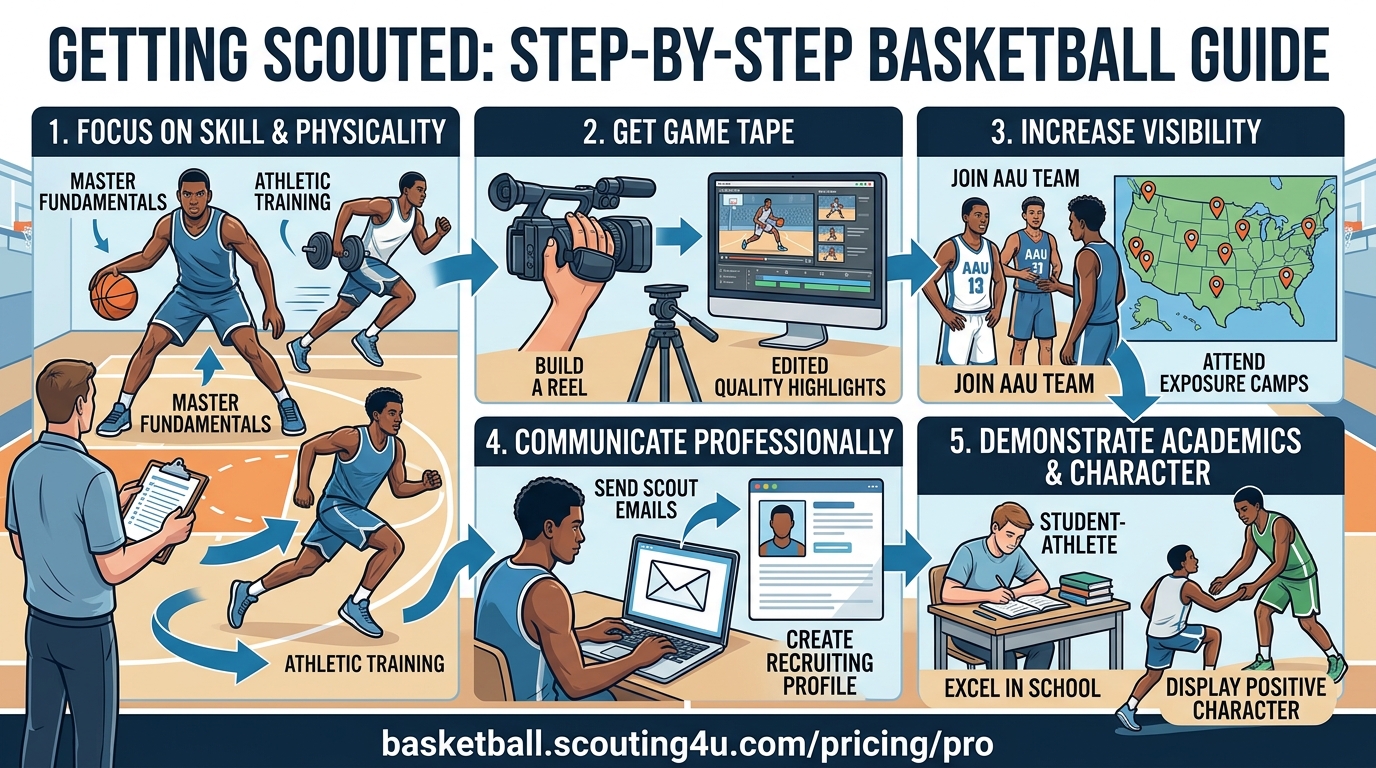
How to Get Scouted in Basketball: Step-by-Step
Key TakeawaysConsistently improve your skills and track your progress to get scouted in basketball.Create a standout bas...