
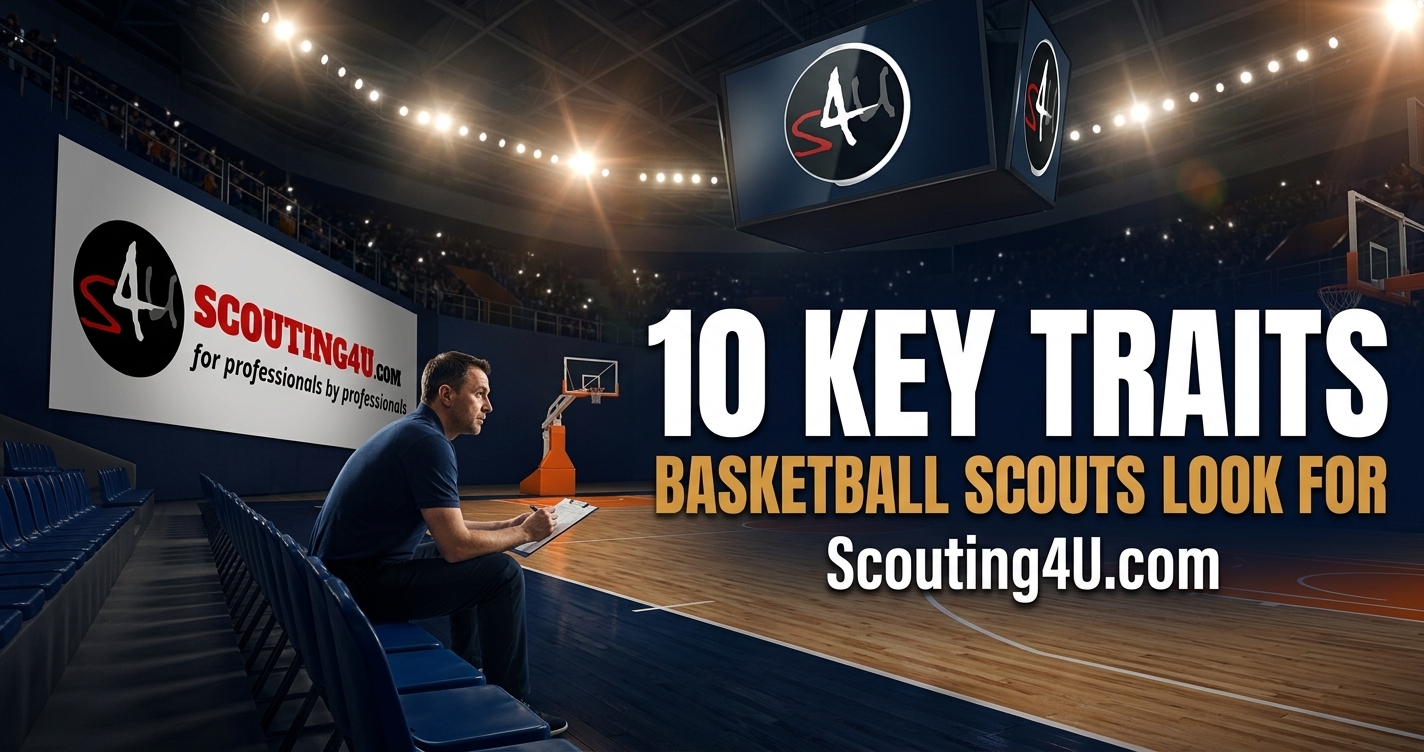
What Do Basketball Scouts Look For? 10 Key Traits
Key Takeaways
What do basketball scouts look for? A combination of shooting accuracy, defensive ability, physical tools, and mental makeup.
Understanding player potential and team fit is as important as raw stats.
Scouts dig into personality, leadership, and work ethic - not just on-court production.
Modern scouting relies heavily on data analytics and purpose-built software tools.
Platforms like Scouting4U give scouts the data infrastructure to make faster, more confident decisions.
Introduction: What Do Basketball Scouts Look For?
Every front office, college program, and European club eventually faces the same question: what do basketball scouts look for when they walk into a gym? The answer is not simple. Scouts are not just watching whether a player can shoot or defend. They are trying to project how that player will perform at a higher level, in a different system, under more pressure, and alongside different teammates. That is a much harder problem than counting points and rebounds.
What do basketball scouts look for that separates a good evaluation from a great one? It comes down to combining physical traits with intangibles, backing observations with data, and understanding how a player fits a specific team's needs. This article breaks down the 10 traits scouts prioritize - and explains why each one matters in the modern game.
1. Shooting Accuracy and Mechanics
Shooting is the first thing most scouts assess. A player who cannot make shots consistently will have a limited role at any level. Scouts watch mechanics closely - release point, footwork, and consistency off the catch versus off the dribble. Percentage numbers matter, but so does shot quality. A player shooting 38% on contested pull-up jumpers is in a different category than one shooting 38% on open catch-and-shoot attempts.
Beyond three-point shooting, scouts track free throw percentage as a proxy for shooting mechanics and coachability. If a player has poor form at the line, fixing it requires both skill work and willingness to change habits. That tells you something about coachability before you ever speak to the player.
When scouts ask what do basketball scouts look for in offensive players, shooting efficiency from multiple zones is almost always the starting point. Tools that break down shot charts and effective field goal percentage by location make this evaluation far more precise than eye-test alone.
2. Defensive Ability and Instincts
Defense wins championships. Scouts know this, and they know that defensive ability is harder to fake over a full game than offensive production. What do basketball scouts look for defensively? Lateral quickness, positioning, communication, and the willingness to compete when the ball is nowhere near you.
Defensive Rating (DRTG) gives scouts a team-context measure of defensive impact. But they also watch film to catch details the box score misses - how a player helps and recovers, whether they give up on plays, and how they handle ball screens. A player who cheats off his man to gamble for steals is not the same as one who actually disrupts opponents within the scheme.
For a deeper look at how defensive analysis feeds into a full evaluation, our guide on basketball defensive scouting and identifying weaknesses walks through the process scouts use to grade defensive players systematically.
3. Physical Attributes and Measurables
Height, wingspan, standing reach, and athleticism are non-negotiable starting points. These measurements set a ceiling on what a player can physically accomplish at the next level. A 6'2" guard with a 6'0" wingspan will struggle to guard shooting guards in a professional setting. That is just reality.
Scouts track more than raw height. Wingspan relative to height is often more telling - a player with a long wingspan can guard bigger players and alter shots without being taller. Vertical leap, sprint speed, and strength-to-frame ratio all factor into projections about how a player's body will hold up against professional competition.
Physical tools alone never close the deal. But when scouts ask what do basketball scouts look for in players with NBA or professional potential, measurables form the foundation on which everything else is built.
4. Basketball IQ and Decision-Making
Basketball IQ is one of the hardest traits to quantify and one of the most important. It covers court vision, read-and-react speed, shot selection, and the ability to execute the right play under pressure. Players with high basketball IQ make everyone around them better. Players with low basketball IQ make mistakes that disrupt flow and force teammates into difficult positions.
Scouts evaluate basketball IQ through film more than stats. They watch how a player reads a defense before the catch, whether they recognize switching vs. hedging coverages, and how they respond when their first option is taken away. Turnover rate matters, but context matters more - a high-assist player with some turnovers is different from a ball-stopper who turns it over on isolation plays.
What do basketball scouts look for in playmakers specifically? The ability to create advantages for others, not just themselves. That requires IQ as much as athleticism.
5. Work Ethic and Coachability
Scouts talk to coaches. They talk to trainers, teammates, and anyone who has spent time with a player in practice settings. What do basketball scouts look for beyond game film? Evidence that a player is willing to work and willing to listen.
A player who arrives early, stays late, and genuinely absorbs coaching feedback will develop faster than one with more talent but less discipline. Scouts weight this heavily because player development is a major part of how teams extract value - especially in the first two or three professional years.
Coachability also shows up in adjustments during a game. Does a player implement halftime corrections? Do they change their approach when a specific matchup is not working? These behaviors are visible on film and tell scouts a great deal about long-term trajectory.
If you are curious how this trait shapes a career path, the article on how to become a basketball scout covers how scouts themselves develop these evaluation instincts over time.
6. Team Fit and System Compatibility
What do basketball scouts look for when evaluating fit? They look at whether a player's strengths match what the team actually needs - not just whether the player is talented in the abstract. A skilled isolation scorer might be redundant on a team built around ball movement. A high-usage point guard might not fit a system that prioritizes off-ball movement and spacing.
Team fit evaluation requires scouts to understand both the player and the organization. That means knowing the head coach's system, the existing roster's strengths and gaps, and the team's projected direction over the next two to three seasons.
Player comparison tools make this process more rigorous. Rather than relying on general impressions, scouts can model how a player's statistical profile matches up against current roster members and identify genuine gaps being filled. Our overview of how to evaluate basketball player fit effectively goes deeper on this process.
7. Personality and Leadership
Team chemistry is real, and a single bad actor can damage it significantly. Scouts assess personality through interviews, background checks, and conversations with people who have coached or played with the prospect. What do basketball scouts look for in terms of character? Accountability, composure, and the ability to handle adversity without becoming a locker room problem.
Leadership does not always mean being the loudest voice. Some of the most effective leaders are quiet workers who set the standard by example. Scouts look for both types - vocal leaders who hold teammates accountable and lead-by-example types who anchor the culture through consistency.
A player's response to failure is especially telling. Do they sulk after a bad game, or do they come back prepared and focused? That single behavioral pattern tells scouts a lot about whether a player will develop or plateau.
8. Consistency and Performance Under Pressure
A player who scores 30 points once and then disappears for three games is less valuable than one who gives you 15 reliable points every night. What do basketball scouts look for when reviewing performance trends? Consistency across game types, opponent quality levels, and high-leverage moments.
Scouts specifically study performance in elimination games, rivalry matchups, and late-game situations. Clutch stats - points, shooting percentage, and turnover rate in the final five minutes of close games - give scouts a read on mental toughness that general stats cannot provide.
Performance drops in away games or against stronger opponents are also noted. Some players elevate against good competition. Others fade. Scouts want to know which type they are dealing with before committing resources to a prospect.
9. Injury History and Durability
Availability is underrated. A player who misses 20 games per season due to recurring injuries is much harder to build around than a slightly less talented player who plays 75 games consistently. What do basketball scouts look for in a player's medical history? Recurring soft tissue injuries, structural damage history, and recovery timelines relative to league norms.
Scouts work with team medical staff to evaluate injury risk. Certain injury types - stress fractures, ACL tears, chronic back problems - carry longer-term concerns than others. The body type and biomechanics of a player also influence durability projections. A heavy, low-center-of-gravity player may protect knees better than a wiry, high-leap athlete who puts stress on joints with every landing.
Scouts do not disqualify players based on injury history alone. But they factor it into contract length, role expectations, and draft position or salary considerations.
10. The Role of Analytics and Scouting Technology
What do basketball scouts look for when using modern analytics platforms? Efficiency metrics that context-adjust raw numbers, shot quality data, defensive impact measures, and lineup analysis that isolates individual contributions within team performance.
Advanced stats like True Shooting percentage, Box Plus/Minus, and on/off net rating give scouts a more honest picture than points and assists. These numbers help scouts identify players whose value is not obvious from watching casual highlights - the defenders who change opponents' shot selection, the passers who improve everyone's efficiency, and the hustle players who never appear in the box score but affect winning.
Technology has also changed scouting logistics. Video tagging, AI-generated reports, and cloud-based databases allow scouts to evaluate players they have never seen in person. What do basketball scouts look for in a scouting platform? Speed, reliability, and the ability to pull up specific clips, tendencies, and comparative data without navigating a clunky system.
To see how these tools have evolved in practice, check out our piece on the future of basketball scouting and how analytics are reshaping the profession. And if you are ready to see the platform firsthand, the Scouting4U features page covers what the tool actually does in a working scouting environment. Organizations comparing options can also review Scouting4U's subscription plans to find the right fit.
Putting It All Together
What do basketball scouts look for? No single trait wins the evaluation. Scouts are building a complete picture - physical tools, skill sets, mental makeup, injury risk, and system fit. A player who scores well across all those areas is a rare find. Most prospects have strengths in some areas and questions in others, and the scout's job is to weigh those trade-offs honestly.
The best scouts combine film study, data analysis, and personal relationship-building into a process that produces accurate projections. They understand what do basketball scouts look for in the context of a specific team's needs, not just abstract talent rankings. And they use every tool available - from advanced platforms to in-person conversations - to reduce uncertainty before a decision is made.
Scouting has always required judgment. What modern analytics and technology do is give that judgment a better foundation to stand on.
Frequently Asked Questions
What do basketball scouts look for in a high school player?
At the high school level, scouts focus heavily on physical tools, athleticism, and upside rather than finished skill. What do basketball scouts look for in younger prospects specifically? Long wingspan, explosive athleticism, and the raw components of a skill - like shooting mechanics that can be refined - matter more than polished production. Scouts also watch how a player competes against stronger opponents and whether they are willing to do the unglamorous work like setting screens and communicating on defense.
What do basketball scouts look for in college players being evaluated for the NBA Draft?
At the college level, scouts expect more developed skills and want to see production against quality competition. What do basketball scouts look for beyond college stats? Positional versatility, defensive capability at the next level, and the ability to function within a professional team structure. Physical measurements at the NBA combine - wingspan, hand size, standing reach - also carry significant weight at this stage.
How important are analytics compared to live observation in scouting?
Both matter, and the best evaluations use both. Analytics flag players worth watching, identify performance patterns across large samples, and provide objective context for what a scout observed in person. Live observation catches the intangibles - body language, effort level, communication habits - that numbers cannot fully capture. What do basketball scouts look for in data versus film? Data tells you what happened; film tells you why.
Do basketball scouts evaluate players differently for European leagues versus the NBA?
Yes, the evaluation criteria shift based on the league's demands. European systems often prioritize tactical IQ, positional versatility, and team-oriented play more than raw athleticism. What do basketball scouts look for when scouting European prospects? How well they read the game within structured systems, their ability to shoot off movement, and their experience in high-level international competition. The physical standards differ somewhat too, since the NBA's athleticism requirements are generally more extreme.
What do basketball scouts look for when using scouting software?
Scouts want tools that let them pull specific clips quickly, compare players across comparable statistical contexts, and generate reports efficiently without manual data entry. What do basketball scouts look for in a platform specifically? Reliability, searchable video libraries, and analytics that translate raw numbers into actionable context. Platforms that combine video, advanced stats, and report generation in one place save significant time across a long scouting season.
Enjoyed this article? Share it with others!
Founder & Lead Scout, Scouting4U
2x EuroLeague champion with 30+ years in professional basketball. Daniel won EuroLeague titles with Maccabi Tel Aviv, helped build the staff behind the 2007 European Championship, and has delivered 100+ professional scouting reports across 50+ leagues. If it happened in a European basketball front office, he was probably in the room. He founded Scouting4U in 2010 to bring championship-level scouting intelligence to every club.
No reviews yet. Be the first to share your experience!
Related Articles
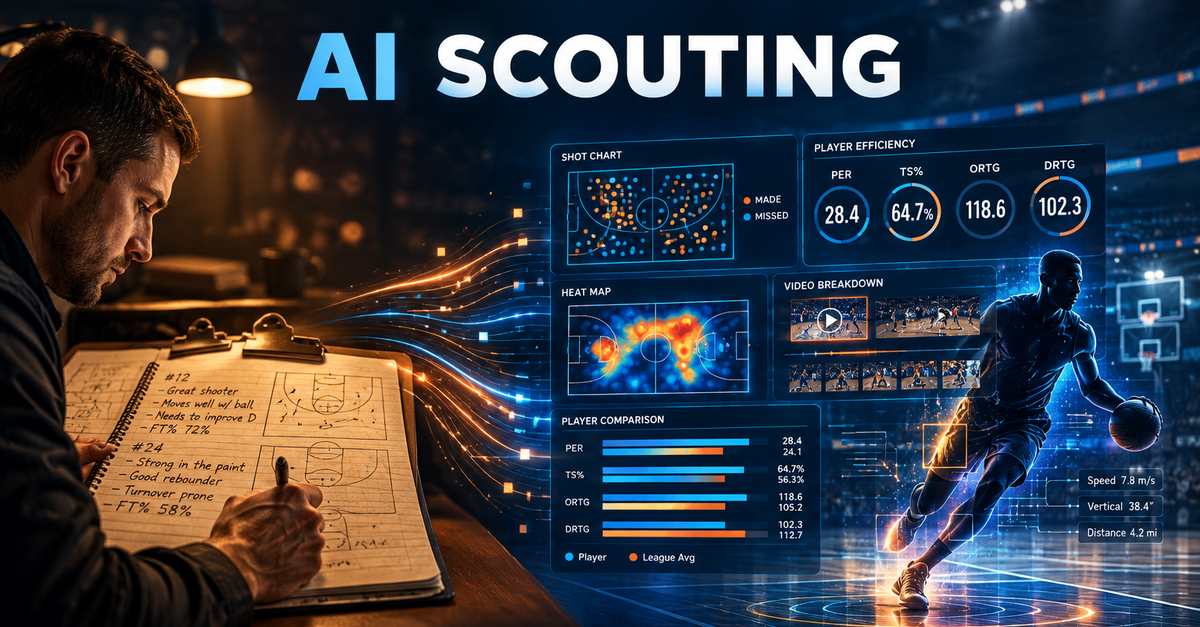
Future of Basketball Scout Reports: AI & Innovation
Key Takeaways Basketball scout reports are changing fast because of AI. Data collection and analysis now happen in a fr...
AI Scouting Reports in Basketball: The Scouting Edge
Key Takeaways AI scouting reports basketball tools give coaches faster, clearer data on players. Scouting4U pairs AI an...
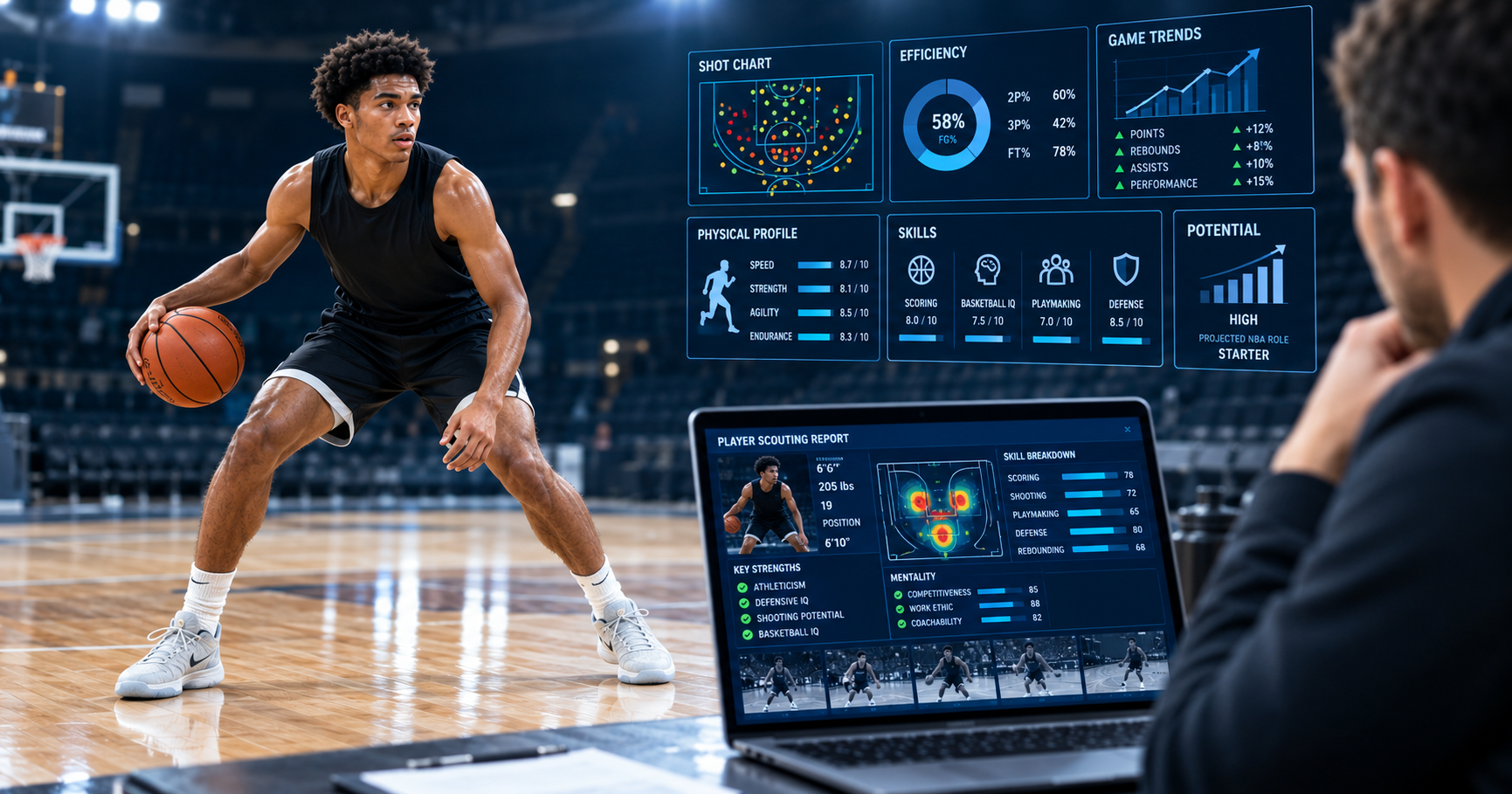
Analyzing Basketball Player Potential: Scouting Insights
Key Takeaways Analyzing basketball player potential combines data analysis with scouting intuition. Core metrics includ...