
How to Become a Basketball Scout: Career Insights
What It Takes to Become a Basketball Scout
Learning how to become a basketball scout is one of the most common questions asked by people who love the game and want to turn that passion into a career. The path isn't always obvious. There's no single degree program, no guaranteed ladder to climb. But there is a clear set of skills, habits, and experiences that separate scouts who get hired from those who don't. This guide walks through every stage of that process - from understanding what the job actually involves, to building the tools and network you need to land your first scouting role. If you're serious about figuring out how to become a basketball scout, the steps below give you a realistic map.
How to Become a Basketball Scout: Understanding the Role First
Before anything else, you need to know what a scout actually does. A basketball scout evaluates players - their skills, their potential, their ability to fit within a specific system. That sounds simple, but the job covers a lot of ground.
Scouts watch film. They attend live games. They talk to coaches, agents, and other scouts. They write detailed reports. They track players over months or years, not just one or two games. And increasingly, they work with data - advanced statistics that reveal things the eye alone can miss.
Scouting is not just about having a good eye for talent. It's about being right consistently, backing up your opinions with evidence, and communicating your findings clearly to decision-makers. A scout who can spot a hidden gem but can't explain why that player fits the system isn't very useful to a front office.
There are also different types of scouting roles. Some scouts focus on the draft - evaluating college or international players for professional teams. Others handle opponent scouting, analyzing upcoming opponents to help coaches prepare game plans. Some scouts work at the youth or amateur level, identifying talent early. Knowing which type of scouting interests you helps you focus your development in the right direction. Understanding how to become a basketball scout also means understanding which lane fits your strengths.
For a deeper look at how pre-game analysis works in practice, check out this guide on how to create a basketball pre-game scouting report. It gives a solid picture of the kind of work opponent scouts do regularly.
Educational Background and Knowledge Base
A formal degree isn't required to become a basketball scout, but education helps. Sports management, kinesiology, exercise science, and statistics are all degrees that provide relevant grounding. A background in data analysis is increasingly useful as front offices lean more on numbers.
That said, self-education matters just as much. Understanding basketball analytics - things like Player Efficiency Rating, True Shooting percentage, on/off splits, and defensive metrics - is now a baseline expectation in most serious scouting roles. You don't need a PhD in statistics, but you do need to speak the language.
Start reading. Study how front offices use data. Learn what advanced metrics actually measure and where they fall short. Resources like Mastering Basketball Analytics for Coaches: A Guide are a good starting point for building that analytical foundation.
Beyond analytics, study the game itself. Watch film with purpose. Learn different defensive schemes, offensive systems, positional roles. Understand what makes a player effective within one system but ineffective in another. This contextual knowledge is what separates scouts who rely on raw athleticism from scouts who find players who actually help teams win. Anyone researching how to become a basketball scout should treat film study as a non-negotiable habit, not an occasional exercise.
How to Become a Basketball Scout: Gaining Practical Experience
Knowing how to become a basketball scout in theory is one thing. Getting actual experience is another. Here's the honest truth: almost everyone who becomes a scout started somewhere unglamorous.
Internships with professional or college teams are one of the best entry points. Many NBA teams, G League franchises, and European clubs take on interns who work in analytics, video, or player personnel. These positions often pay little or nothing at first, but the exposure is worth it. You learn how a front office operates, how decisions get made, and what scouts actually look for day to day.
Coaching is another route. Many scouts started as coaches at the high school or small college level. Coaching forces you to evaluate players constantly - who starts, who comes off the bench, who can handle specific matchups. That daily evaluation work builds real scouting instincts.
Volunteer scouting is also viable. Some organizations, particularly at the amateur level, will take on volunteer scouts who attend games and submit reports in exchange for experience and references. It's unglamorous work, but it builds your portfolio.
Whatever path you take, start writing scouting reports immediately. Don't wait for a job to start practicing. Pick players - college players, international players, local high school prospects - and write detailed reports on them. Compare your assessments to what actually happens. Hold yourself accountable. This self-directed practice is one of the fastest ways to sharpen your eye. When people ask how to become a basketball scout with no formal background, this is usually the most direct answer: do the work before anyone pays you to do it.
Understanding how to assess individual players within a team context is a skill worth studying. This piece on how to evaluate basketball player fit effectively covers that evaluation process in detail.
Building Your Network in Basketball
Scouting is a relationship business. Most scouting jobs are not posted publicly. They're filled through referrals and word of mouth. If nobody in basketball knows who you are, it's very hard to get hired, no matter how good your reports are.
Attend games at every level you can access. College games, G League games, summer leagues, international competitions. Introduce yourself to coaches, agents, and other scouts. Be useful. Be present. Be consistent.
Go to basketball conferences and combine events. The NBA Draft Combine, Portsmouth Invitational, Basketball Without Borders - these are all events where scouts, coaches, and front office people gather. Being in those rooms, even as a volunteer or observer, puts you in contact with the right people.
Social media also plays a role now. Sharing thoughtful analysis publicly - on Twitter/X, LinkedIn, or a personal blog - can get you noticed by people in the industry. Several scouts have built their reputations this way. Write well, post consistently, and be specific. General takes don't stand out. Detailed analysis of specific players or trends does. Many people who study how to become a basketball scout underestimate how much visibility matters early in a career.
Mentorship matters too. If you can find an experienced scout willing to review your reports or give feedback, take that seriously. Even one honest critique from someone who has done the job for years is worth more than a dozen generic courses.
How to Become a Basketball Scout Who Stands Out: Technology and Tools
The scouts who stand out today are the ones who combine traditional film evaluation with modern technology. Front offices expect both. If you only watch games and write subjective reports, you'll be at a disadvantage against candidates who can also work with data and scouting software.
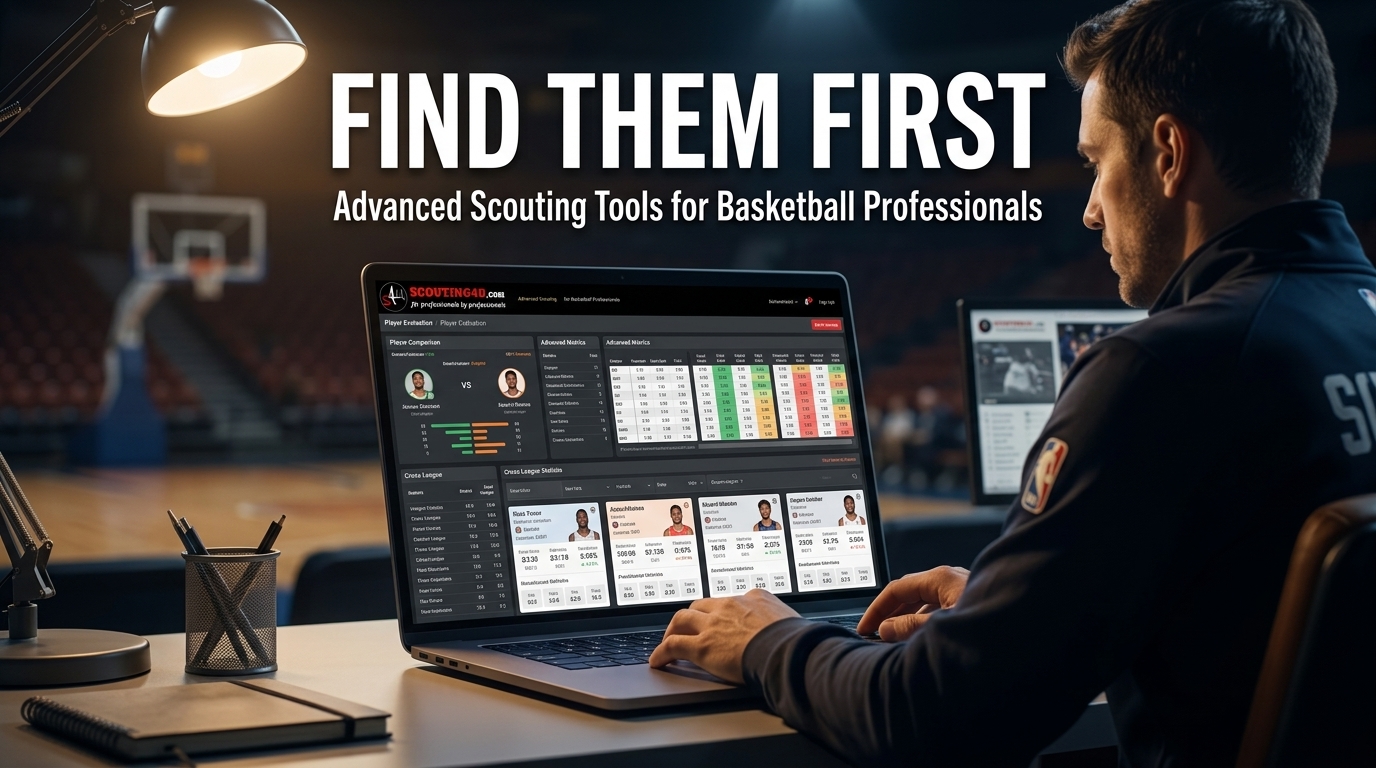
Platforms like Scouting4U give scouts access to comprehensive player databases, analytics tools, and report generation features. Learning how to use these tools efficiently is a skill in itself. Speed matters - scouts who can produce thorough, accurate reports quickly are far more valuable than scouts who take days to analyze what a good platform can surface in hours. For anyone learning how to become a basketball scout today, getting comfortable with professional scouting software is no longer optional.
AI is also changing how scouting reports get written. Tools that can draft initial reports based on statistical inputs free scouts up to focus on the observational and contextual elements that machines can't replicate. If you're curious how that works in practice, watch AI write a scout report in real-time to see the process firsthand.
The Scouting4U platform also offers features and tools designed specifically for scouts at every level - from amateur evaluators to professional front office staff. Getting familiar with professional-grade tools before you're hired makes you a more credible candidate when interviews come around.
Beyond scouting platforms, learn video editing software. Being able to cut film clips, create highlight packages, and assemble video breakdowns of specific tendencies is a skill many scouts overlook. It's also one that front offices notice.
Building a Portfolio and Breaking Into Professional Scouting
To get hired by a professional organization, you need a portfolio. This is a collection of scouting reports, player evaluations, and analytical work that demonstrates your ability. Think of it as your resume, but specific to the job.
Your portfolio should show range. Include reports on players at different levels - high school, college, international. Include different types of reports - player evaluations, opponent breakdowns, draft profiles. Show that you can evaluate players who went on to succeed, but also be honest about players you misjudged and what you learned from those assessments.
When you apply to teams, be realistic about the level you're targeting. Most scouts don't start in the NBA. They start with G League teams, college programs, European clubs, or independent scouting services. Build your track record at those levels first. How to become a basketball scout at the professional level almost always starts with proving yourself somewhere smaller.
Scouting4U's subscription plans give you access to the kind of player data and analytics tools professional scouts use daily. Using those tools to build your portfolio shows hiring managers that you already work at a professional standard - even before you've held a professional title.
Patience is part of the process. Scouts who break into NBA front offices typically spend years working their way up through lower levels. That's not discouraging - it's just the reality of a competitive field where the number of jobs is small and the number of applicants is large. The ones who get hired are the ones who kept improving and stayed visible.
Key Skills Every Successful Basketball Scout Needs
When people ask how to become a basketball scout, they often focus on knowledge - analytics, film study, basketball IQ. Those things matter. But the soft skills matter just as much.
Objectivity is critical. Scouts must be able to separate what they want to see from what's actually there. Bias - toward a player's athleticism, their highlights, or their reputation - is one of the biggest failure modes in scouting. The best scouts are honest, even when it's inconvenient.
Communication is equally important. A scout who can't explain their reasoning clearly is hard to trust. Whether you're writing a report or presenting to a front office, your ability to make a clear, evidence-backed argument determines whether your work gets acted on.
Attention to detail separates good scouts from average ones. Watching what a player does off the ball. Noticing how they respond to physicality. Tracking their effort on defensive possessions late in games. These details don't always show up in box scores, but they often determine whether a player succeeds at the next level.
Curiosity helps too. The best scouts are always learning - about new metrics, new systems, new markets. The international game, for example, is increasingly important for anyone looking to find undervalued players. Understanding the European basketball transfer market is one way to get ahead of scouts who only focus on domestic leagues. Knowing how to become a basketball scout who evaluates globally, not just locally, is a real competitive edge.
Finally, resilience. You will be wrong. Players you recommend will bust. Players you passed on will become stars. What matters is whether you learn from those mistakes and adjust. The scouts who last in this business are the ones who treat each evaluation as a chance to get better, not just a chance to be right.
Conclusion: Your Path to Becoming a Basketball Scout
How to become a basketball scout is not a question with one answer. The path looks different for everyone. But the fundamentals are consistent: learn the game deeply, build your analytical skills, get practical experience, use the right tools, and stay connected to the people who make hiring decisions.
Start today. Write a scouting report on a player you've been watching. Study one advanced metric until you understand it fully. Reach out to one person in basketball you'd like to learn from. Anyone who wants to understand how to become a basketball scout should treat every game, every report, and every conversation as a building block. The scouts who figure out how to become a basketball scout don't wait for permission - they build their credentials one evaluation at a time.
If you want to learn more about the tools and platforms that professional scouts rely on, visit the About Scouting4U page to understand what the platform was built to do and who it was built for.
Frequently Asked Questions
What does a basketball scout do on a daily basis?
Most scouts spend their time watching film, attending games, writing player evaluations, and communicating findings to coaches or front office staff. The daily workload varies by role - opponent scouts work primarily around the game schedule, while player personnel scouts often travel to watch prospects during the season and offseason.
How to become a basketball scout with no experience?
Start by writing scouting reports on your own, even without a formal role. Volunteer with local teams, apply for internships at any level, and build a portfolio of evaluations. Use analytics tools like Scouting4U to work at a professional standard from the beginning. Most experienced scouts started exactly the same way - doing the work before anyone paid them to do it. That's really the core answer to how to become a basketball scout when you're starting from zero.
What do basketball scouts look for in players?
Scouts evaluate athletic ability, basketball IQ, specific skills (shooting, playmaking, defense), coachability, and fit within a team system. Advanced metrics like PER, True Shooting percentage, defensive rating, and on/off splits are standard tools for quantifying what the eye sees. The best scouts weigh both the numbers and the context behind them.
Can I become a basketball scout remotely?
Remote scouting is increasingly viable, especially with access to streaming services, film platforms, and analytics tools. Many scouts now evaluate international players remotely before deciding whether to see them in person. Platforms like Scouting4U are designed to support this kind of remote evaluation work at a professional level. Learning how to become a basketball scout in a remote capacity is a legitimate path, particularly for international player evaluation.
How long does it take to become a professional basketball scout?
There's no fixed timeline. Some people break into professional roles within two or three years of focused effort. Others take longer, especially if they're building from scratch without existing connections in the industry. The speed depends on the quality of your work, the strength of your network, and your willingness to take entry-level roles while you build your track record. How to become a basketball scout faster often comes down to one thing: producing better work more consistently than the competition.
Enjoyed this article? Share it with others!
Founder & Lead Scout, Scouting4U
2x EuroLeague champion with 30+ years in professional basketball. Daniel won EuroLeague titles with Maccabi Tel Aviv, helped build the staff behind the 2007 European Championship, and has delivered 100+ professional scouting reports across 50+ leagues. If it happened in a European basketball front office, he was probably in the room. He founded Scouting4U in 2010 to bring championship-level scouting intelligence to every club.
No reviews yet. Be the first to share your experience!
Related Articles

Future of Basketball Scout Reports: AI & Innovation
Key Takeaways Basketball scout reports are changing fast because of AI. Data collection and analysis now happen in a fr...
AI Scouting Reports in Basketball: The Scouting Edge
Key Takeaways AI scouting reports basketball tools give coaches faster, clearer data on players. Scouting4U pairs AI an...

Analyzing Basketball Player Potential: Scouting Insights
Key Takeaways Analyzing basketball player potential combines data analysis with scouting intuition. Core metrics includ...