
NBA Combine Measurements: High School Basketball Analytics for US Scouts
Basketball Recruiting Analytics Chicago Denver Markets
The NBA combine is one of the most important events in professional basketball. Every year, top prospects gather to prove their worth before the draft. Scouts, coaches, and front office staff watch closely. They collect data. They compare players. They make decisions that can shape a franchise for years.
But what exactly happens at this pre-draft showcase? What do the measurements mean? And how do scouts use this data to make drafting decisions?
This guide breaks it all down. We cover every major measurement taken at the event, explain what it tells scouts, and show how it connects to real on-court performance. Whether you are a player preparing for the draft, a scout building your evaluation process, or a fan who wants to understand the draft better, this article is for you.
Youth Basketball Development Boston Philadelphia
The NBA combine is a multi-day event held each spring in Chicago. It takes place after the college basketball season ends and before the draft. Prospects who hope to be drafted attend and go through physical measurements, athletic tests, and interviews with teams.
This pre-draft event gives teams a chance to evaluate players in a controlled setting. College games happen in different arenas, against different competition. The combine levels the playing field. Every player faces the same tests. Every measurement follows the same protocol.
Teams use this data alongside game film and statistical analysis. No single number tells the full story. But together, these metrics paint a clear picture of a player's physical profile and athletic potential.
If you want to understand how to get noticed as a player at events like this, read our guide on how to get scouted in basketball.
High School Basketball Measurements Tracking
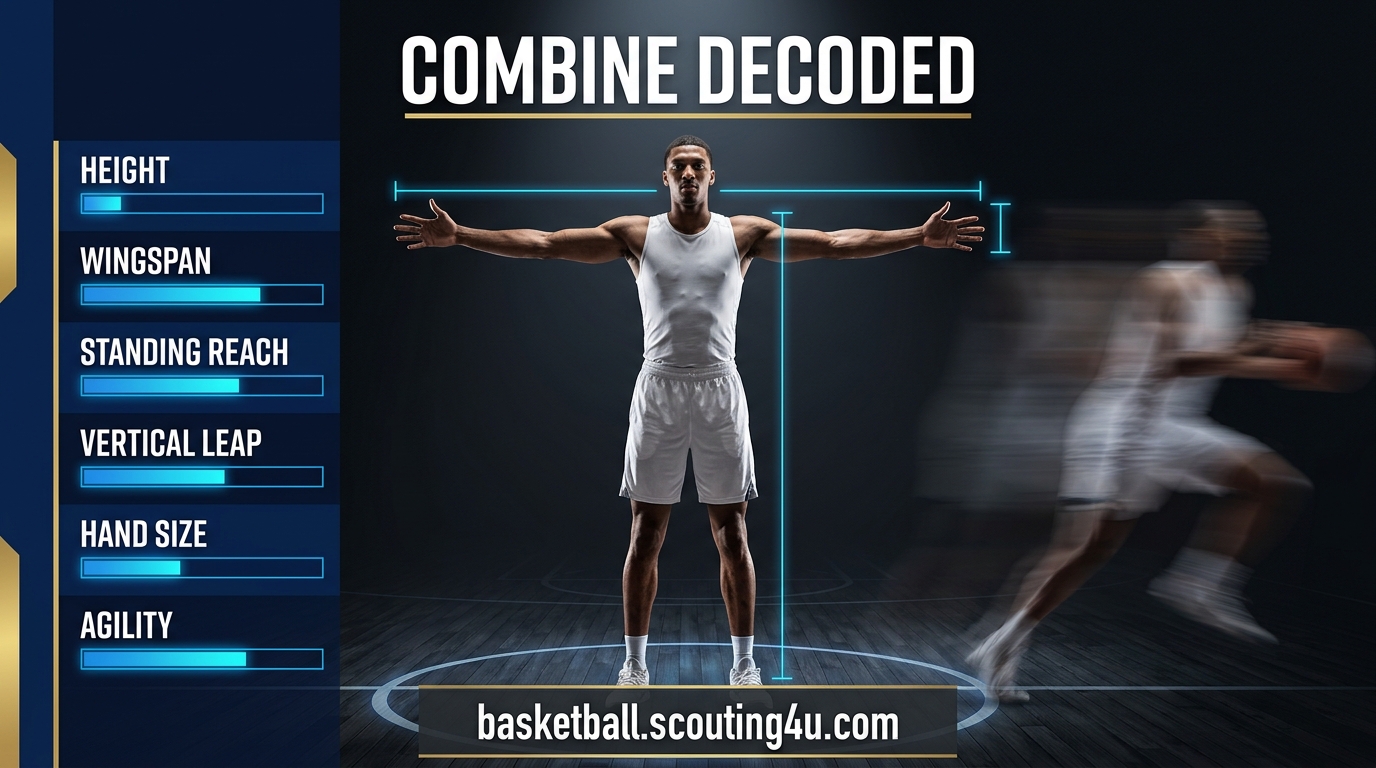
Height and wingspan are among the first measurements taken at the event. They seem simple. But they tell scouts a great deal about a player's physical tools.
Height is measured in two ways. The first is height with shoes. The second is height without shoes. The barefoot measurement is often used for official comparisons. It removes the variable of different shoe heights.
Wingspan is the distance from fingertip to fingertip when a player stretches both arms out horizontally. Many prospects have a wingspan that exceeds their height. This is called a positive wingspan differential. A longer wingspan is a major advantage both at the draft and throughout a career.
Why Wingspan Matters More Than You Think
Height tells you how tall a player is. Wingspan tells you how far they can reach. These are different things.
A player who is 6'6" with a 7'0" wingspan can contest shots, deflect passes, and grab rebounds that a player of the same height but shorter arms simply cannot reach. This is why wingspan is one of the most discussed measurements among scouts at the NBA combine.
Centers and power forwards need wingspan to dominate the paint. Guards with long wingspans can become elite perimeter defenders. Even at the same position, a longer wingspan often separates good players from great ones.
Historically, players like Bill Russell and Wilt Chamberlain benefited enormously from their wingspans. More recently, players like Giannis Antetokounmpo have shown how an extreme wingspan differential changes what a player can do on both ends of the floor. Pre-draft measurement data consistently identifies wingspan as one of the strongest predictors of defensive impact.
Hand Size Measurements
Hand length and hand width are also measured at the event. These numbers matter more than people realize.
Larger hands help players control the ball. A player with bigger hands can grip the ball more securely during dribbles, passes, and dunks. Ball security under pressure often comes down to hand size.
For point guards and shooting guards, hand measurements can indicate how naturally a player handles the ball. For big men, large hands help with rebounding and finishing through contact.
Standing Reach: A Key NBA Combine Metric
Standing reach is another critical measurement at the NBA combine. It measures how high a player can reach while standing flat-footed with one arm raised.
This number is often more useful than height alone. Two players can be the same height but have very different standing reaches. A player with a longer standing reach can contest shots without jumping as high. They can tip balls at a higher point. They can alter shots simply by raising their arm.
For centers and power forwards, standing reach is one of the most predictive measurements for defensive impact. Shot blockers and rim protectors almost always post elite standing reach numbers.
Vertical Leap Testing at the NBA Combine
The vertical leap test is one of the most exciting parts of the NBA combine. It measures how high a player can jump. There are two versions. The standing vertical measures a jump from a standstill. The max vertical measures a jump with a running approach.
Standing Vertical vs. Max Vertical
Both numbers matter when scouts evaluate prospects. But they tell scouts different things.
A high standing vertical shows pure leg power. It tells scouts how quickly a player can generate force without movement. This is useful for post players who jump in traffic, without room for a running start.
A high max vertical shows athleticism in transition. It reflects a player's ability to gather themselves and explode in full stride. This matters most for guards and wings who attack the rim in open court situations.
Elite vertical numbers from the NBA combine often correlate with finishing ability, rebounding above the rim, and shot-blocking potential. Michael Jordan's legendary athleticism began with his elite vertical leap. Modern prospects like Zion Williamson and Anthony Edwards posted impressive vertical numbers before their dominant careers in the league.
What Scouts Look for in Vertical Results
Scouts do not just want the highest jumper in the room. They want to understand context. A center with an average vertical but elite standing reach may be more effective as a rim protector than a smaller player who jumps higher.
A guard with a modest vertical but explosive first step may be more dangerous offensively than someone who jumps higher from a standstill. Scouts receive the raw numbers from combine testing. Good scouts know how to apply those numbers to positions, roles, and team needs.
Speed and Agility Drills
Speed and agility tests are a critical part of the NBA combine evaluation process. They tell scouts how quickly a player moves and how well they change direction.
The main agility test is the lane agility drill. Players start at one corner of the paint and move through a set path. They must touch each point of the key in order. The test measures lateral quickness, change of direction, and overall body control.
The three-quarter court sprint measures straight-line speed from one end of the court to the three-quarter line.
Why Agility Matters at Every Position
Quick guards use agility results to prove they can get past defenders. They use it to navigate screens. They use it to create separation on the perimeter.
But agility is not just for guards. Big men with strong agility scores can switch onto smaller players in modern defensive schemes. As the league moves toward versatile, switchable lineups, agility has become increasingly important for forwards and even some centers.
Players like Allen Iverson and Chris Paul demonstrated what elite agility can do offensively. Defensively, players like Draymond Green show how agility in a bigger body creates matchup problems for opponents.
For a deeper look at how European basketball systems develop agility and footwork differently than American programs, read our breakdown of European vs American basketball key differences.
Strength Testing at the NBA Combine
Strength is measured at the NBA combine primarily through the bench press test. Players complete as many reps as possible with 185 pounds on the bar. The number of reps gives scouts a sense of upper body strength and muscular endurance.
Who Benefits Most From Strength Testing
Centers and power forwards benefit most from high strength scores. Physical post play requires the ability to hold position. Players must set screens, absorb contact, and maintain leverage against equally large opponents.
But guards and wings benefit from strength results too. A wing who can hold their ground on the perimeter and not get bodied off their spot is far more valuable defensively. A guard with strong hands and core is more difficult to strip on drives to the basket.
Players like Shaquille O'Neal dominated because of their strength. In the modern era, players like Nikola Jokic show how strength in combination with skill creates unstoppable offensive options.
Scouts often compare bench press numbers to body weight percentages. Raw numbers matter less than how strong a player is relative to their frame.
Body Fat Percentage and Body Composition
Body fat percentage is also recorded during combine testing. It might seem like a minor detail. But it tells scouts how a player's body composition may affect their performance and durability.
A player carrying extra body fat may struggle to maintain stamina over an 82-game season. Conversely, a player who is extremely lean may need to add functional muscle to compete physically at the next level. Body composition measurements help teams plan development timelines for young prospects.
Teams often identify players who have the frame and athleticism to add weight and strength. With proper training, these players can become more physically dominant over time.
How Scouts Use NBA Combine Data
Measurement data from the NBA combine does not exist in isolation. Scouts combine these results with game film, statistical models, and personal interviews to build a complete player profile.
Physical tests reveal what a player can do athletically. But basketball is also a mental and skills-based game. A player with average combine numbers but elite skill, court vision, and basketball IQ can outperform a physically gifted player who lacks those qualities.
The best scouts understand this balance. They use the physical data to flag outliers. A player with elite wingspan but below-average vertical might be better suited to a specific defensive role. A player who posts exceptional speed numbers but average strength may need a specific playing style to succeed.
Advanced analytics tools help scouts layer physical measurements with performance data. If you want to learn how to use data-driven analysis in your scouting workflow, explore how to master basketball analytics including PER and True Shooting. And if you want professional tools to help with the analysis process, visit Scouting4U's pricing page for a full list of features and plans.
Common Mistakes When Interpreting Combine Data
Not all scouts use measurement data correctly. Here are some common mistakes to avoid.
Overvaluing a Single Measurement
One standout number does not make a player. A massive wingspan means nothing if a player cannot move their feet on defense. A 40-inch vertical does not guarantee finishing at the rim if a player lacks body control.
Always look at the full physical profile. No single measurement tells the whole story.
Ignoring Position Context
A 6'2" point guard and a 6'2" small forward are measured by the same standards at the NBA combine. But the same number means different things for each player.
A short wingspan at the shooting guard position is a bigger concern than at the point guard position. An average vertical at center matters less than an average vertical at power forward. Context is everything when reading pre-draft results.
Forgetting the Human Element
Some players perform poorly at the NBA combine due to injury, nerves, or illness. These numbers capture one moment in time. They are not a permanent measure of a player's ability.
Scouts should combine pre-draft data with a broader body of evidence. Season-long performance, coachability, and mental resilience matter just as much as a player's standing vertical on combine day.
Practical Tips for Scouts Using Pre-Draft Measurements
Here is a simple framework for using combine measurements effectively.
Start with the full physical profile. Look at height, wingspan, standing reach, and hand size together. These tell you what the player is built for.
Layer in athletic test results. Vertical, speed, and agility numbers tell you how the player moves within that physical profile.
Compare results to positional averages. A measurement only has meaning relative to the position and role being projected.
Cross-reference data with game film. Pre-draft tests measure potential. Game film shows how that potential is currently being used.
Consider development trajectory. A 19-year-old with a lean frame and average strength may look very different at 23 with proper training.
Conclusion
The NBA combine is far more than a showcase event. It is a structured data collection process that gives teams objective measurements of the most important physical and athletic traits in basketball. Understanding what the event measures - and why those measurements matter - is essential for scouts, analysts, and anyone who wants to evaluate talent seriously.
Height, wingspan, standing reach, vertical leap, speed, agility, and strength all tell scouts something different. Used together, these measurements build a physical blueprint for each prospect. Combined with game film, statistics, and personal evaluation, results from the NBA combine help teams make smarter, more informed draft decisions.
The best scouts do not just collect data. They know how to read it, contextualize it, and apply it to the specific needs of their team. That skill - turning raw numbers into real decisions - is what separates good scouts from great ones.
If you are working to sharpen your player evaluation skills, explore how shot selection and scoring efficiency factor into player assessment in our guide to mastering shot selection and scoring efficiency in basketball.
Frequently Asked Questions
What is the NBA combine?
The NBA combine is an annual pre-draft event where top basketball prospects undergo physical measurements and athletic tests. Teams use the data to evaluate players before the draft. It is held each spring in Chicago and is the primary standardized measurement event in the pre-draft process.
What measurements are taken at the NBA combine?
The event measures height (with and without shoes), wingspan, standing reach, hand size, body fat percentage, and weight. Athletic tests include standing vertical, max vertical, lane agility, and the three-quarter court sprint. Players also complete a bench press test to measure upper body strength.
Why is wingspan so important at the NBA combine?
Wingspan indicates how far a player can reach, which affects their ability to contest shots, steal passes, and grab rebounds. A prospect measured with a wingspan longer than their height has a positive wingspan differential. This is considered a major physical advantage both at the draft and throughout a player's career.
How do scouts use NBA combine data?
Scouts use combine data as one part of a larger player evaluation process. They combine physical measurements with athletic test results, game film, statistical analysis, and personal interviews. No single number from the NBA combine makes or breaks a player's draft stock on its own.
Can a player hurt their draft stock at the NBA combine?
Yes. A poor performance can raise concerns about a player's athleticism, physical readiness, or work ethic. However, one bad day at the NBA combine rarely destroys a player's draft position if their game film and season stats are strong. Context always matters when evaluating pre-draft results.
Is the NBA combine the same as a pro day or workout?
No. The NBA combine is a centralized event where all prospects are tested together under the same conditions. Private workouts and pro days are separate events where individual teams bring in specific players for focused evaluation. Both are part of the pre-draft process, but the combine is the standardized measurement event that puts every prospect on equal footing.
What vertical jump is considered elite at the NBA combine?
A max vertical of 40 inches or more is considered elite. Most players fall between 28 and 36 inches on their max vertical at the NBA combine. Standing verticals above 32 inches are also considered strong. Context matters - a high vertical for a center is evaluated differently than a high vertical for a point guard.
Enjoyed this article? Share it with others!
Founder & Lead Scout, Scouting4U
2x EuroLeague champion with 30+ years in professional basketball. Daniel won EuroLeague titles with Maccabi Tel Aviv, helped build the staff behind the 2007 European Championship, and has delivered 100+ professional scouting reports across 50+ leagues. If it happened in a European basketball front office, he was probably in the room. He founded Scouting4U in 2010 to bring championship-level scouting intelligence to every club.
No reviews yet. Be the first to share your experience!
Related Articles

Basketball Analysis: Elevate Game Insights with Video
Key TakeawaysSystematic video breakdown improves decision-making at every level of the game.Video tagging software makes...
Mastering Basketball Video Analysis for Coaches
Key TakeawaysBasketball video analysis helps coaches evaluate players and teams more accurately.Scouting4U offers advanc...
True Shooting Percentage Basketball: Calculation & Insights
Key TakeawaysTrue shooting percentage basketball offers a comprehensive efficiency metric that goes beyond simple field ...