
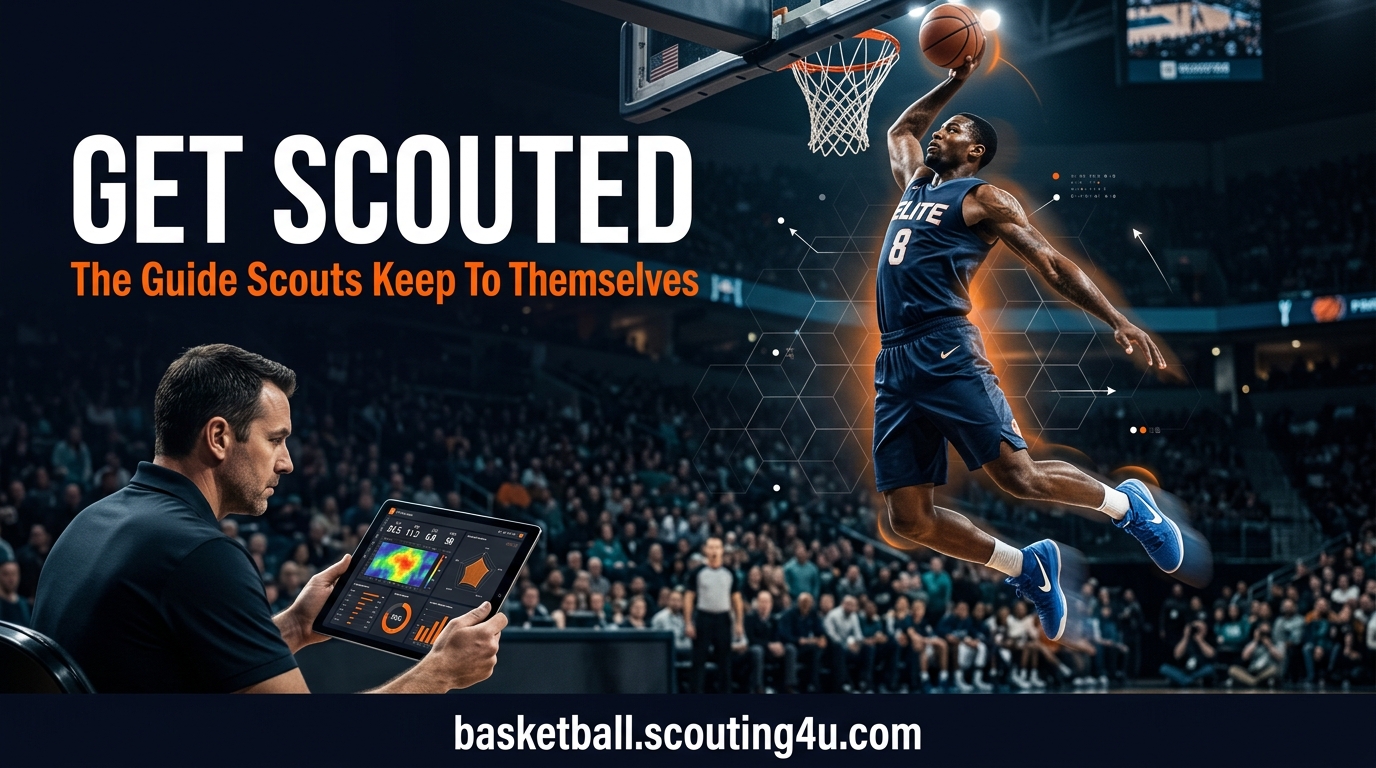
How to Get Scouted in Basketball: The Player Development Guide Scouts Don't Tell You About
Most players who dream of going pro make the same mistake. They focus entirely on getting better. They focus almost nothing on getting seen.
Talent is the price of entry. What separates players who get signed from players who don't comes down to three things: measurable performance, smart visibility, and knowing exactly what scouts look at when they pull up your profile.
This guide covers both. It shows you how to develop into the player scouts want through a structured basketball player development approach. It also shows you how to make sure scouts can actually find you. Strong basketball player development is not just about skill - it is about being seen by the right people at the right time. Every serious basketball player development plan must account for both performance and visibility.
What Scouts Are Actually Looking For
Before you build a development plan, you need to understand how scouts evaluate players. Most coaches develop players. Scouts grade them. And they grade against a very specific checklist.
When a scout opens your profile on a platform like Scouting4U, the first thing they look at is not your highlight reel. It is your efficiency numbers across a full season. One great game means nothing. Consistent production against tough competition means everything.
Here are the core metrics scouts care about most:
True Shooting % (TS%) - This measures shooting efficiency across 2-pointers, 3-pointers, and free throws in one number. A high TS% shows a scout you are not just scoring a lot - you are scoring efficiently. Anything above 58% at the semi-professional level gets attention. Understanding how to improve this number is central to any serious basketball player development program. For a deeper dive into this metric, see our guide on Mastering Basketball Analytics: PER and True Shooting.
Player Efficiency Rating (PER) - This is a combined metric. It rewards positive contributions like points, rebounds, assists, steals, and blocks. It also penalizes negative ones like turnovers and missed shots. It is not a perfect metric, but scouts use it to quickly filter large groups of players.
Usage Rate (USG%) - This tells scouts how much of the team's offense runs through you. A player with a 28% usage rate and a high TS% is a very different prospect from a player with a 15% usage rate and the same efficiency. Scouts need to know which one you are.
Assist-to-Turnover Ratio - For guards and playmakers, this is non-negotiable. It is one of the clearest signs of good decision-making.
Defensive Rating (DRTG) - This is the most underrated metric in basketball player development. Most players focus only on offense. Players with strong DRTG scores get signed at levels their offensive numbers alone would never justify.
Want to go deeper on these numbers? Our guide to basketball statistics breaks each one down in simple terms.
Building Your Youth Basketball Development Plan
A development plan is not a training schedule. It is a roadmap with a clear destination. The best youth basketball development plans work backward from where you want to be at 18, 20, and 22. They define what needs to be true about your game at each stage to get there. Effective basketball player development requires this kind of long-term, structured thinking.
Ages 13–16: Foundation Phase
This window is for building skills that will never leave you. Players who skip this phase spend the rest of their careers patching holes. Solid basketball player development at this age sets the ceiling for everything that follows.
Key priorities at this stage:
Footwork and body control before athleticism - athletes plateau; skilled players keep improving
Shooting mechanics locked in before you try to add range
Two-hand ball-handling - your weak hand at 15 sets your ceiling at 22
Defensive positioning habits - these take years to build and seconds to expose
Do not rush to specialise in one skill or one position too early. Versatility is what scouts pay a premium for. To understand how positional versatility is valued differently across markets, read our breakdown of European vs American Basketball: Key Differences.
Ages 16–19: Refinement and Competitive Testing
This is where your basketball player development needs to meet real competition. Everything you have built needs to be tested against players who want it just as badly as you do.
Key priorities at this stage:
Move from skill drills to skill use under pressure
Start tracking your own stats every single game - not just points, but TS%, turnover rate, and defensive contests
Build your first player profile with video highlights and season stats
Get into high-exposure competitions - showcases, camps, and tournaments where scouts are present
Ages 19–23: Professional Preparation
By this stage, the question is not whether you can play. It is whether scouts can find you. This is the phase where basketball player development becomes as much about visibility as it is about skill.
Key priorities at this stage:
Play in leagues that are tracked on scouting platforms - if your games are not on a platform scouts use, your stats do not exist to them
Build a professional digital presence - a complete, current player profile with up-to-date season data
Prepare specifically for basketball combines (see below)
Find agents and programs that connect players to professional teams
Not sure how professional scouting platforms work? Read our overview of how scouting platforms evaluate players to understand what scouts see when they search your name.
How to Actually Get Scouted
Getting scouted is not about luck. It is about putting yourself in the path of people who are actively looking. The most overlooked element of basketball player development is this visibility component - the best players in the world get passed over because the right scouts never found them.
1. Play Where Scouts Look
Scouts do not have time to watch every league in every country. They use platforms like Scouting4U to filter 10,000+ players down to a short list. If your stats and video are not on a platform they trust, you are invisible - no matter how talented you are.
If your team uses Scouting4U, you can access your own player profile through the Rookie membership. You get full season stats, video highlights, shot charts, and tendency data. This shows you exactly what scouts see when your name comes up. You can also share your profile directly with coaches, agents, and evaluators. To see what tools are available at each level, visit our subscription plans and pricing page.
2. Build a Player Profile That Does the Work For You
A strong basketball player profile for scouts includes:
Full season stats with context - league level, team role, and opponents
Video organised by skill, not just a chronological highlight reel
A shot chart showing where you score from and at what efficiency
Honest notes on your role - starter or bench, minutes played, system used
The biggest mistake players make is showing only their best plays. Scouts are professionals. They watch enough film to spot a cherry-picked reel immediately. Show them a complete picture and they will trust what they see. Understanding shot selection and efficiency is a key part of this - our guide to Mastering Shot Selection: The Complete Guide to Scoring Efficiency in Basketball gives you the framework scouts use to evaluate your scoring decisions.
3. Understand Combine Measurements Before You Walk In
Basketball combine preparation is one of the best investments a prospect can make. Most players show up having trained for basketball. The best prospects show up having trained for what is specifically measured at the combine. This targeted preparation is a critical and often overlooked dimension of basketball player development.
Key combine measurements include:
Vertical leap (standing and max approach) - train plyometrics specifically for this
Lane agility and three-quarter court sprint - pure conditioning and acceleration work
Wingspan and standing reach - you cannot train these, but knowing yours helps you understand how scouts see your positional fit
Shooting drill performance - not your game shooting, but your form under structured evaluation conditions
Knowing the NBA combine benchmarks lets you build a targeted physical training program. You stop just "working out" and start training with a purpose. For a full breakdown of what these numbers mean, read our guide on Understanding NBA Combine Measurements.
Integrating Analytics Into Your Training
Most players train based on feel. They work on what they think they are bad at, what feels hard, or what coaches have told them. Analytics replaces that guesswork with real evidence. Incorporating data into your routine is what separates modern basketball player development from old-school guesswork.
Here is a simple analytics-driven training loop:
After every game: Log your stats. Note your TS%, turnovers, and defensive actions. It takes five minutes.
Every week: Look for patterns. Are your turnovers happening mostly in pick-and-roll situations? Is your shooting efficiency dropping in the second half? These patterns point directly to what needs work.
Every month: Review your shot chart. Most players are surprised by how different their self-perception is from reality. The spots they think they score from often do not match the data.
Each season: Compare your current numbers to the same metrics from last season. Basketball player development is not always linear, but it should trend in the right direction over a full year.
Learn more about how to use data in your own basketball player development routine with our analytics guide for players.
The European Pipeline: Why Structure Wins
The rise of European players in the NBA and EuroLeague is not a coincidence. It is the direct result of structured development systems - academies, youth national programs, and professional clubs that invest in analytics-driven basketball player development from early ages.
What European systems do well:
Long-term basketball player development over short-term results
Technical skill training prioritised alongside athleticism
Early exposure to video analysis and self-evaluation
Regular scouting and evaluation by qualified scouts
This is the model Scouting4U was built on. Co-founder Daniel Gutt spent 30+ years coaching and scouting at the highest levels of European basketball. He worked with clubs competing in the EuroLeague and served on the staff of the 2007 European Championship–winning Russian National Team. The platform reflects what he actually looks for when evaluating players for professional programs. To understand how opponent analysis fits into professional-level evaluation, see The Complete Guide to Basketball Opponent Analysis Using Scouting4U.
Frequently Asked Questions
What stats should I be tracking as a developing basketball player? Start with five key ones: True Shooting % (efficiency), Usage Rate (your role on offense), Assist-to-Turnover Ratio (decision-making), Defensive Rating (defensive impact), and Rebound Rate (positioning and effort). Once you understand these, add PER for an overall view. Tracking these numbers consistently is the foundation of data-driven basketball player development.
How can I get my player profile in front of scouts? The most direct path is to play in leagues tracked on professional scouting platforms and keep your player profile current with stats and video. If your team uses Scouting4U, the Rookie membership gives you personal access to your profile and lets you share it directly with scouts and coaches.
At what age do scouts start evaluating players seriously? It varies by level. Serious evaluation usually begins around 16–17 for national-level prospects and 18–19 for international professional leagues. That said, scouts track players for years before making recommendations. Your performance at 16 is part of the story they are reading at 19. This is why basketball player development must be treated as a long-term process, not a short-term sprint.
What is the difference between a highlight reel and a real scouting profile? A highlight reel is marketing. A scouting profile is evidence. Scouts need to see your efficiency across a full season, your role on the team, how you perform in different situations, and video that shows your tendencies - not just your best plays.
Is basketball combine preparation the same as regular training? No. Regular training improves your game. Combine preparation improves your scores on specific measurements scouts use to evaluate physical tools. The two overlap, but you need to train both with intention. Start combine-specific preparation at least 3–4 months before your target combine date. Integrating combine prep into your overall basketball player development calendar is the mark of a professional-minded prospect.
Your Next Step
The players who go pro are not always the most talented players in the gym. They are the ones who combine talent with a structured basketball player development plan, measurable progress, and enough visibility that the right people can find them. Whether you are just starting your basketball player development journey or preparing for your first professional combine, the steps in this guide apply at every level.
Get your public player profile and make sure every scout who searches your name sees exactly what you want them to see.
Scouting4U is a professional basketball analytics platform built by coaches with 30+ years of EuroLeague experience. Trusted by 200+ professional teams across 50+ leagues worldwide.
Enjoyed this article? Share it with others!
Founder & Lead Scout, Scouting4U
2x EuroLeague champion with 30+ years in professional basketball. Daniel won EuroLeague titles with Maccabi Tel Aviv, helped build the staff behind the 2007 European Championship, and has delivered 100+ professional scouting reports across 50+ leagues. If it happened in a European basketball front office, he was probably in the room. He founded Scouting4U in 2010 to bring championship-level scouting intelligence to every club.
No reviews yet. Be the first to share your experience!
Related Articles
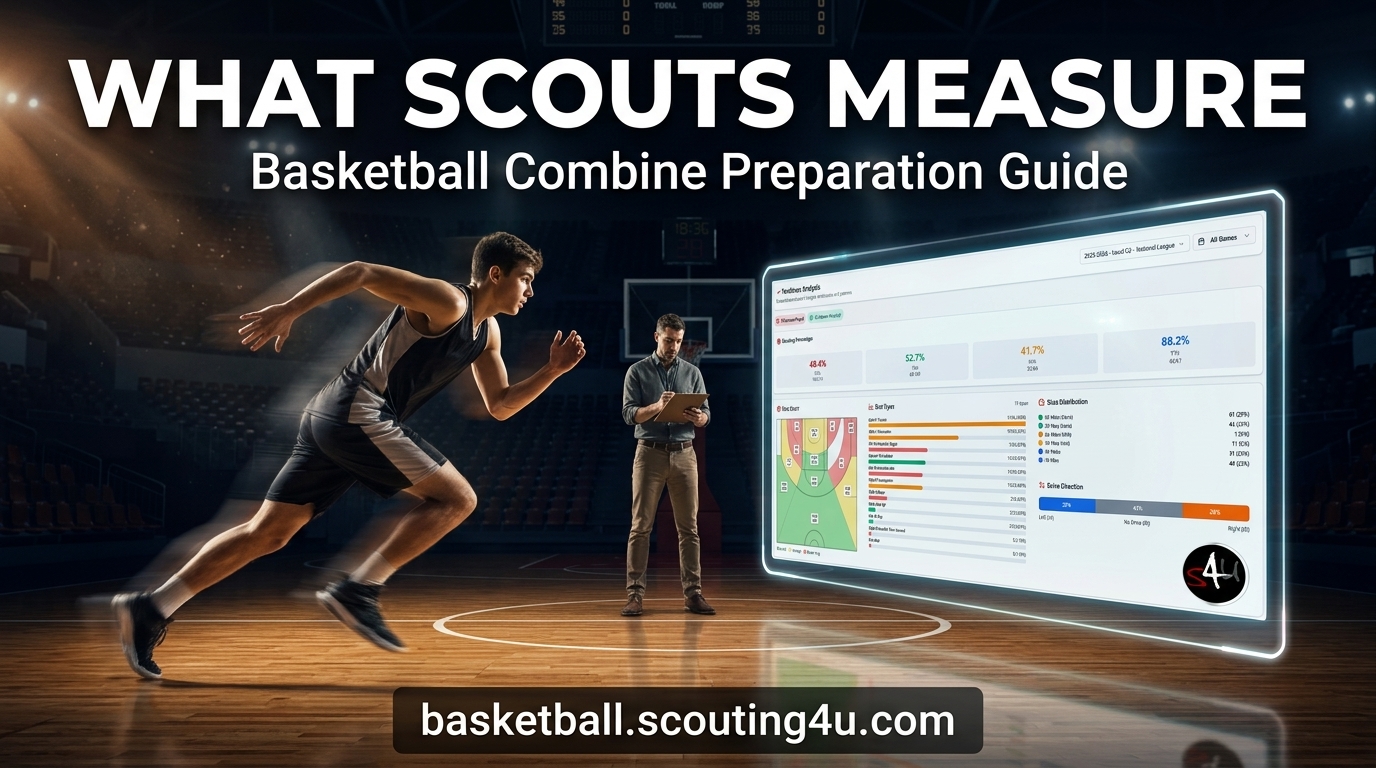
Basketball Combine Preparation: What Scouts Measure
What Is Basketball Combine Preparation?Basketball combine preparation is the structured process of getting ready to perf...
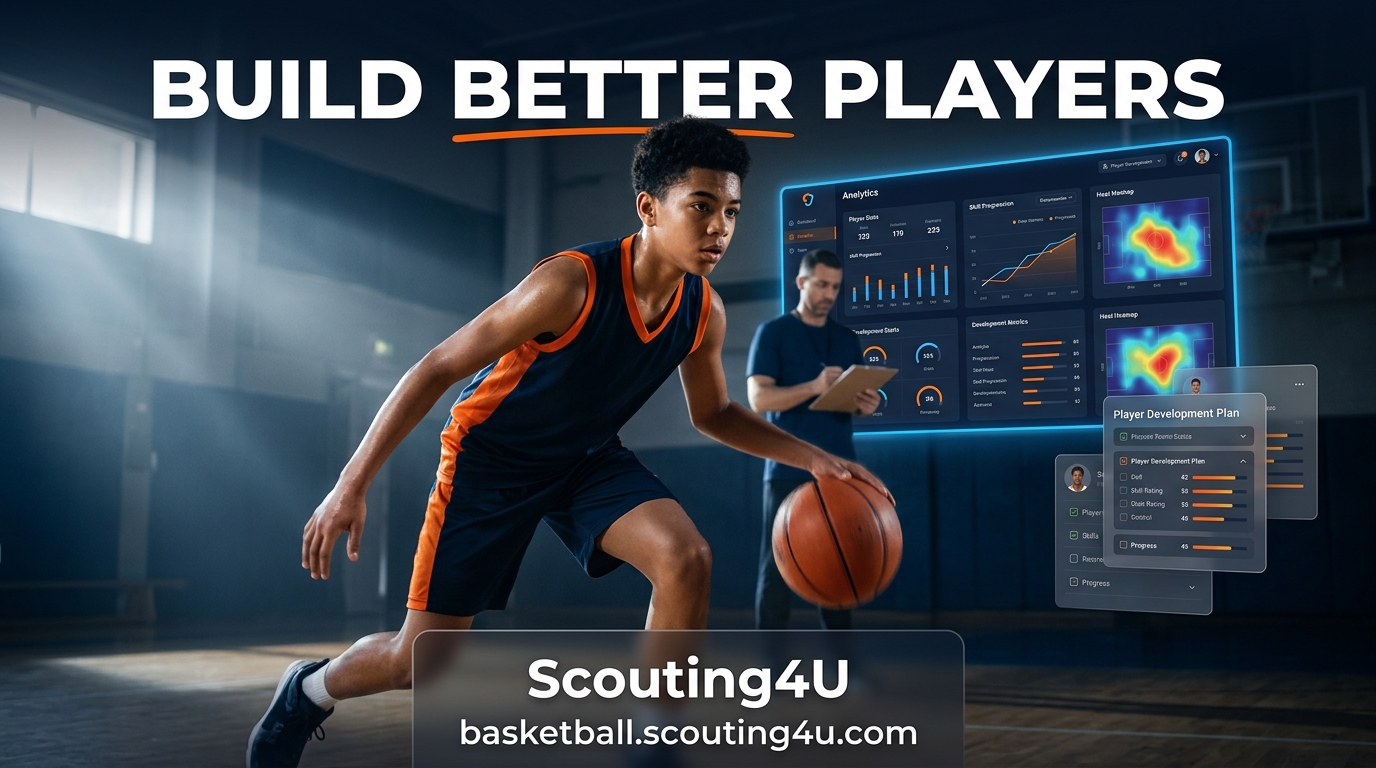
Creating a Youth Basketball Development Plan That Works
Key TakeawaysA youth basketball development plan is crucial for player growth and scouting readiness.Tracking basketball...
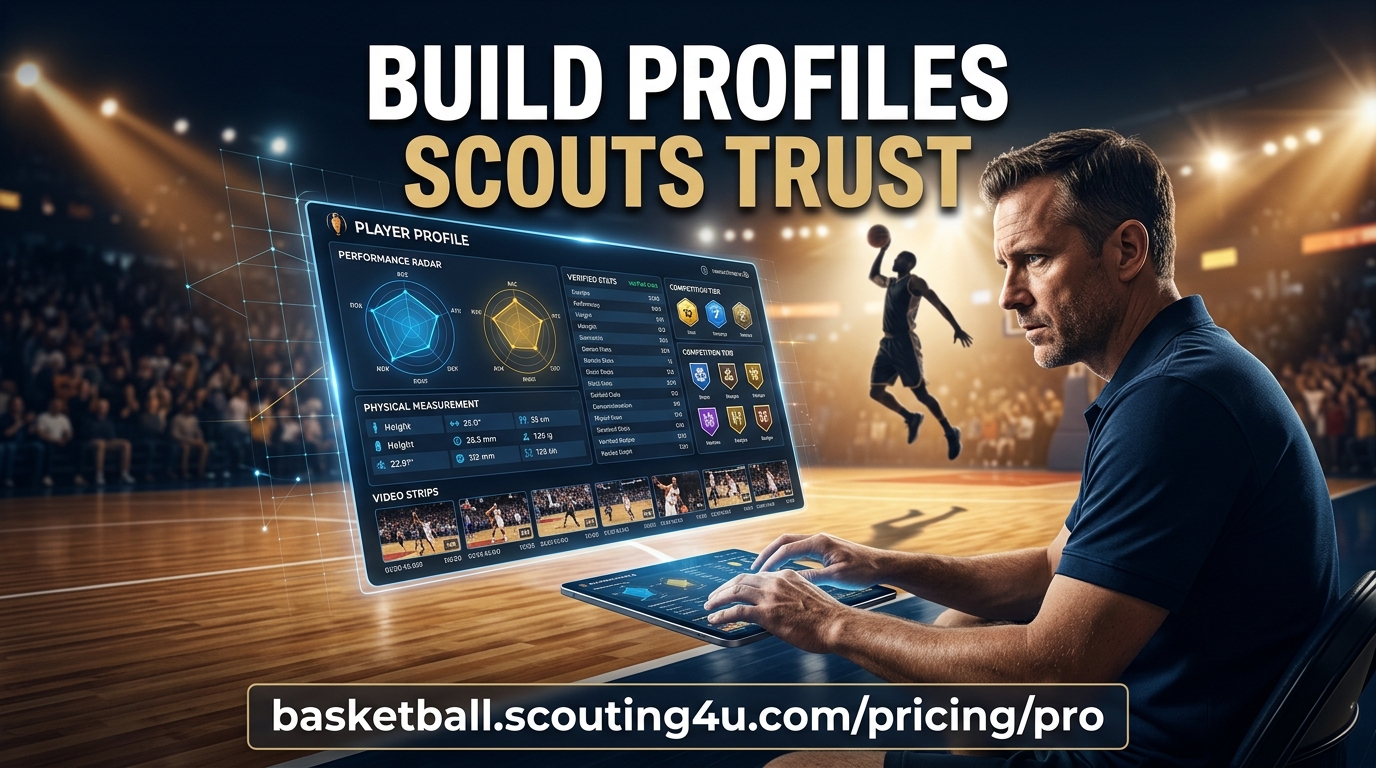
How to Build a Basketball Player Profile for Scouts
Key TakeawaysCreating a strong basketball player profile for scouts is crucial for getting noticed.Track essential baske...