
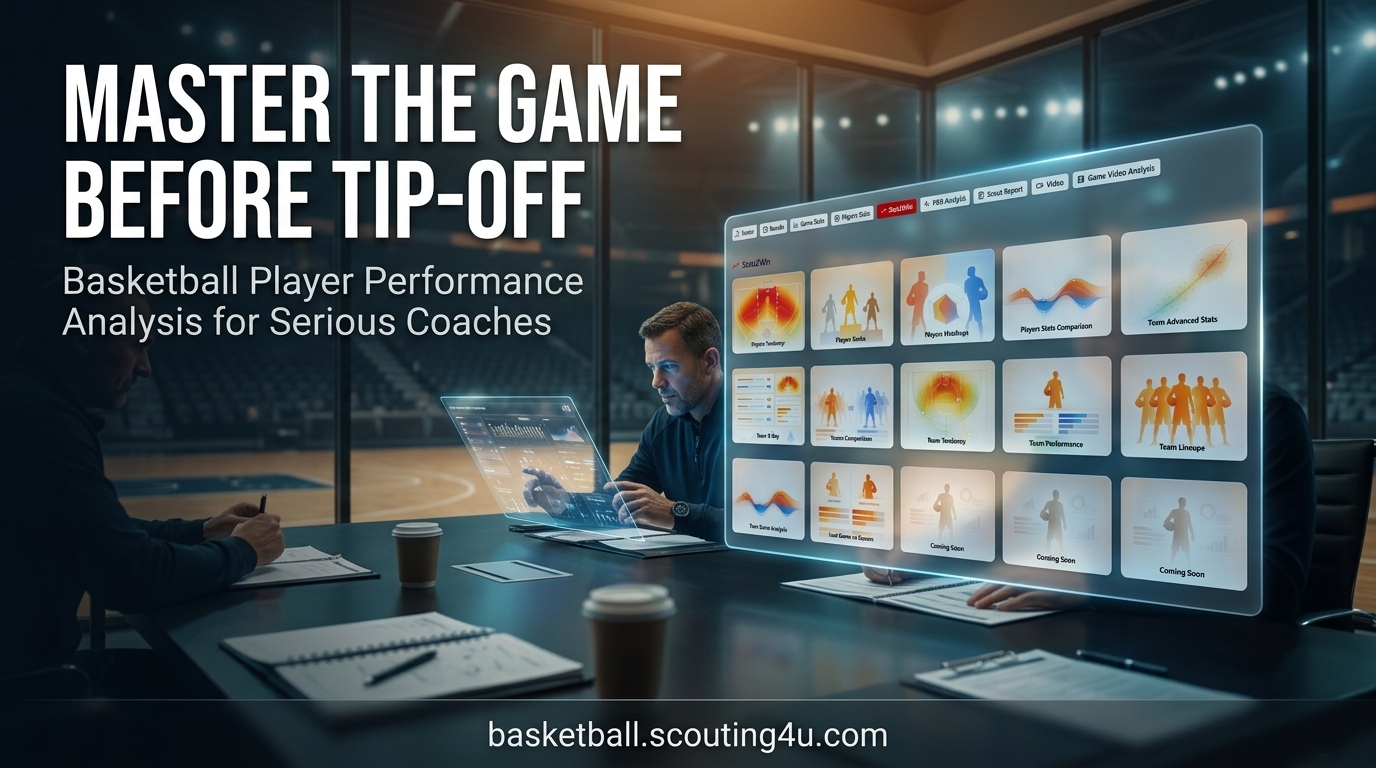
Mastering Basketball Player Performance Analysis Tools
Key Takeaways
Basketball player performance analysis tools are now standard in professional and college scouting.
Advanced metrics like PER, TS%, and ORTG go far beyond basic box scores.
Video analysis combined with data gives coaches a complete picture of player ability.
Scouting4U offers practical solutions built for scouts, coaches, and player development staff.
Data-driven recruitment consistently outperforms gut-feel decisions over a full season.
Why Basketball Player Performance Analysis Tools Matter
Basketball has changed. Coaches who relied only on eye tests are now competing against teams that run full analytics departments. Basketball player performance analysis tools give scouts and coaches a structured way to measure what they see on the court. They turn guesswork into evidence.
The shift started in the NBA, but it moved fast. Today, European leagues, college programs, and even well-organized high school teams use some form of performance data. If you are not using basketball player performance analysis tools, you are working with less information than your competition.
That gap matters in recruiting. It matters in game planning. And it matters when a player's contract is on the line.
What Basketball Player Performance Analysis Tools Actually Include
The term covers a broad set of methods. Some coaches think only of stats software. Others think only of video. In practice, the best programs combine both. Here is what a complete setup looks like.
Statistical Tracking and Advanced Metrics
Basic stats - points, rebounds, assists - tell you what happened. Advanced metrics tell you why. Tools that calculate Player Efficiency Rating (PER), True Shooting Percentage (TS%), Offensive Rating (ORTG), and Defensive Rating (DRTG) help you understand a player's real contribution to winning.
For example, a player who scores 18 points per game on poor shot selection may hurt the team more than he helps. A player averaging 10 points but with an elite TS% and high assist-to-turnover ratio might be far more valuable. Basketball player performance analysis tools surface these differences clearly.
Platforms like Scouting4U let you filter stats by game result, opponent strength, and game situation. That context changes everything. You can read more about that approach in this article on filtering stats by game result for winning insights.
Video Analysis and Film Review
Numbers tell you what happened. Video shows you how. Basketball player performance analysis tools that include video let coaches tag specific plays, compare clips side by side, and build libraries of a player's tendencies. A scout reviewing a point guard's pick-and-roll reads, for instance, can clip every relevant possession and see patterns that raw stats cannot capture.
For a deep dive into how film review works in practice, the complete guide to basketball video analysis covers the full process from clip tagging to presentation.
Player Profiles and Scouting Reports
Basketball player performance analysis tools also include profile systems. These pull together stats, video clips, physical measurements, and written assessments into one document. A well-built profile saves hours of back-and-forth between scouts. It also makes it easier for a coach to evaluate a player they have never seen live. You can learn how to build one properly in this guide on how to build a basketball player profile for scouts.
How to Use These Tools in Player Development
Basketball player performance analysis tools are not just for scouting. Coaches use them inside their own programs to develop players faster.
Identifying Weaknesses with Data
A player who struggles in the fourth quarter may have a conditioning problem. A player whose three-point percentage drops against zone defense has a shot-selection issue. Basketball player performance analysis tools help coaching staffs spot these patterns before they become habits. Early identification leads to better, more targeted training.
Instead of running generic drills, a development coach can assign specific work based on what the data shows. That is a more efficient use of limited practice time.
Visual Feedback in Practice
Players respond well to seeing themselves. Showing a guard two clips - one where he attacks off the dribble correctly and one where he telegraphs the pass - is more effective than explaining the difference verbally. Basketball player performance analysis tools that include video make this possible in minutes, not hours.
Teams that build video review into daily practice routines see faster skill development. The feedback loop shortens. Players make corrections within days, not weeks.
Tracking Progress Over Time
One snapshot tells you where a player is. A trend tells you where they are going. The best basketball player performance analysis tools store historical data so you can compare this month's numbers to last month's. A player who has improved their assist-to-turnover ratio steadily over three months is developing real decision-making skills, not just having a hot stretch.
Using Basketball Player Performance Analysis Tools for Recruitment
Recruitment is where basketball player performance analysis tools deliver the most obvious return. The old model - a scout watches a few games and trusts his instincts - still has value. But it works better when backed by data.
Building a Target List with Data
College coaches and professional scouts can now set specific statistical thresholds and surface players who meet them. A coach looking for a wing who defends at a high level, moves the ball, and takes efficient shots can filter thousands of players down to a short list in minutes. Without basketball player performance analysis tools, that same process takes months of travel and game attendance.
Evaluating Players Across Different Leagues
Comparing a player from the Spanish ACB to one from the Turkish league is hard without context. Different leagues have different pace, competition levels, and tactical styles. Basketball player performance analysis tools that include league-adjusted metrics make cross-league comparison possible. If you scout European leagues, understanding those differences is worth reading about - the European basketball vs NBA breakdown covers many of the context factors that affect how you read stats.
Reducing Costly Mistakes
A bad signing at the professional level can cost a team millions. A bad scholarship offer can set a college program back for years. Basketball player performance analysis tools reduce that risk. They do not eliminate it - no tool does - but they give decision-makers more evidence to work with. A player who looks good in highlights but has a poor assist-to-turnover ratio, low defensive rating, and inconsistent effort in film will not hide behind clips when the full data is available.
What to Look for in Basketball Player Performance Analysis Tools
Not every platform is built the same. When choosing a tool for your program, there are a few practical criteria worth applying.
Data Coverage and League Access
A tool that covers only one league has limited use for scouts who work internationally. The best basketball player performance analysis tools aggregate data from multiple leagues - European, college, and pro - so scouts can follow players across different competitions and seasons.
Ease of Use
Complex platforms slow people down. If coaches have to spend hours learning the software, they will stop using it. Good basketball player performance analysis tools have clean interfaces, logical navigation, and output formats that are easy to share with staff and ownership. This is a practical concern, not a minor one.
Video Integration
Stats without video leave gaps. The best platforms connect data directly to relevant footage, so when you see an anomaly in a player's numbers, you can pull up the clips immediately. That integration is what separates basic stat trackers from full basketball player performance analysis tools.
Customization Options
Different roles need different views. A head coach wants team-level summaries. A position coach wants individual breakdowns. A GM wants contract-year comparisons. Basketball player performance analysis tools that allow custom dashboards and filtered reports work for everyone without requiring separate software for each role.
Scouting4U and Basketball Player Performance Analysis Tools
Scouting4U was built specifically around basketball player performance analysis tools for scouts and coaches who work at a professional level. The platform covers stats from European leagues, provides video-linked reports, and offers profile tools that match what clubs and agents actually need.
Daniel Gutt, who founded Scouting4U, built the platform from decades of direct scouting work. That background shows in the design. The filters, the report formats, and the comparison tools reflect how scouts actually work - not how a software engineer imagined they work.
For teams evaluating Scouting4U's basketball player performance analysis tools, the platform features page breaks down everything the system includes. For pricing by program type, the subscription plans page covers the available tiers.
Scouting4U also publishes regular content on how to use basketball player performance analysis tools effectively. The blog covers topics from possession analysis to combine preparation - practical material that coaches and scouts use directly in their work.
Making the Transition to Data-Driven Scouting
Some coaches push back on analytics. They worry that numbers reduce basketball to a spreadsheet exercise. That concern has some basis - over-indexing on data without watching film is a real mistake. But refusing to use basketball player performance analysis tools at all puts a program at a structural disadvantage.
The right approach is integration. Watch the player. Read the data. Review the film. Let each method check the others. A player who looks great in the film but has poor advanced stats in high-leverage situations might be getting by on athleticism in a weak league. Basketball player performance analysis tools help you ask the right follow-up questions.
Programs that do this well - combining live scouting with structured basketball player performance analysis tools - make better decisions than programs that rely on either method alone. The evidence for that is not theoretical. It shows up in roster construction, player development timelines, and draft hit rates across professional sports.
Start with one area: commit to using basketball player performance analysis tools consistently for one part of your evaluation process - whether that is defensive rating, shot quality, or assist-to-turnover trends. Build from there. The transition does not have to happen all at once.
Frequently Asked Questions
What are basketball player performance analysis tools?
Basketball player performance analysis tools are software platforms and methods that use statistics, video, and advanced metrics to evaluate player ability. They help coaches, scouts, and development staff make decisions based on data rather than impressions alone. Common tools include stat tracking software, video tagging systems, and player profile platforms like Scouting4U.
How do basketball player performance analysis tools improve scouting?
They give scouts the ability to filter large player pools quickly, compare performance across different leagues with context, and identify trends that are invisible in highlight clips. Basketball player performance analysis tools also reduce the time spent on travel by surfacing the most relevant candidates before a scout commits to watching games in person.
Can smaller programs benefit from basketball player performance analysis tools?
Yes. The idea that analytics only work at the professional level is outdated. College programs, well-organized youth clubs, and semi-professional teams all use basketball player performance analysis tools to sharpen their recruitment and development processes. Many platforms now offer tiered pricing that makes access practical at lower budget levels.
What advanced metrics should I focus on first?
Start with True Shooting Percentage (TS%) for offensive efficiency, Defensive Rating (DRTG) for defensive contribution, and assist-to-turnover ratio for ball-handling decisions. These three metrics together give you a fast, reliable read on whether a player helps a team win. Once you are comfortable with those, Player Efficiency Rating and on/off court splits add another layer of insight.
How does video analysis work alongside statistical basketball player performance analysis tools?
Video analysis and stats work best together. Stats tell you what the pattern is. Video tells you why it exists. Most serious basketball player performance analysis tools now link statistical anomalies directly to relevant film clips, so you can move from a number that looks unusual straight to the possessions that produced it. That combination is faster and more accurate than either method used alone.
Enjoyed this article? Share it with others!
Founder & Lead Scout, Scouting4U
2x EuroLeague champion with 30+ years in professional basketball. Daniel won EuroLeague titles with Maccabi Tel Aviv, helped build the staff behind the 2007 European Championship, and has delivered 100+ professional scouting reports across 50+ leagues. If it happened in a European basketball front office, he was probably in the room. He founded Scouting4U in 2010 to bring championship-level scouting intelligence to every club.
No reviews yet. Be the first to share your experience!
Related Articles
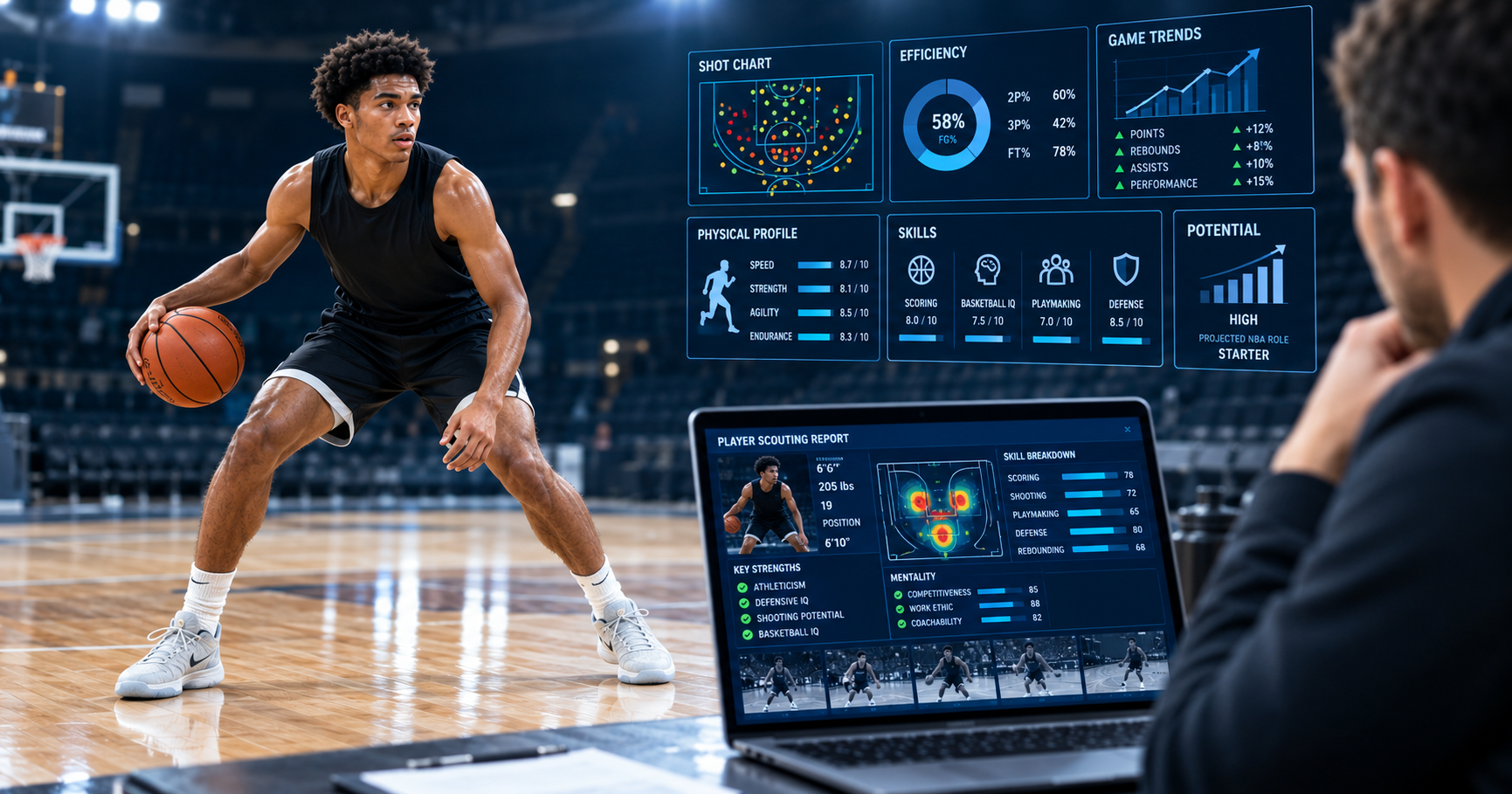
Analyzing Basketball Player Potential: Scouting Insights
Key Takeaways Analyzing basketball player potential combines data analysis with scouting intuition. Core metrics includ...

Mastering Basketball Service: Scouting Insights & Tools
Key TakeawaysA strong basketball service covers everything from player evaluation to game strategy analysis.Scouting4U g...
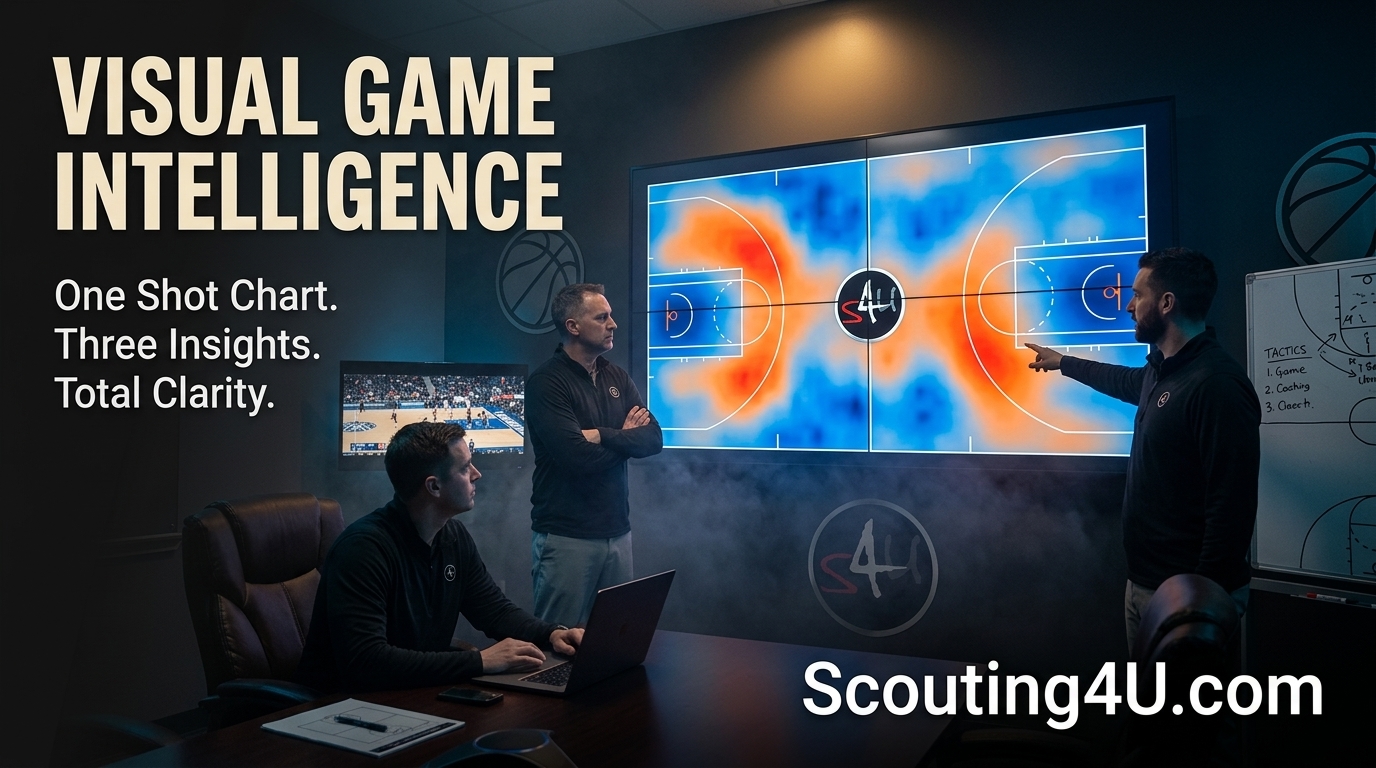
One Shot Chart. Three Insights Visual: Game Plan Revolution
Key TakeawaysA basketball shot chart three insights visual approach reveals high-efficiency zones, player tendencies, an...